


Many organizations often conflate the roles of talent acquisition (TA) and human resources (HR), assuming they are interchangeable. Yet, while both functions work with people, their primary missions, strategic focus, and core activities are fundamentally different.
Talent acquisition is a crucial recruitment function focused on attracting and hiring top talent to drive business success and build a true competitive edge. Human resources, on the other hand, oversees all people operations, compliance, and internal employee relations to maintain organizational stability. Understanding the distinction between TA and HR is essential for modern companies aiming to optimize their structures and achieve sustainable growth.
This article highlights the practical and strategic differences between TA and HR, explains why HR should not lead the hiring process, and defines the vital supporting role HR plays in talent management.
Key Functional Differences: Talent Acquisition vs. HR
When comparing talent acquisition and human resources, it’s helpful to clarify each function’s core responsibilities:
| Talent Acquisition | Human Resources |
|---|---|
| Sourcing and engaging candidates | Managing employee relations |
| Employer branding and recruitment marketing | Benefits, payroll, and compliance |
| Screening and selecting top talent | Employee handbook and policy management |
| Partnership with hiring managers | Conflict resolution and workplace culture |
| Proactive workforce planning | Record-keeping and risk management |
- Talent Acquisition: Proactively builds talent pipelines and cultivates relationships with passive candidates and future prospects. Relies on marketing, networking, data analysis, and advanced sourcing tactics to secure top performers quickly.
- Human Resources: Centers on supporting employees after hiring, handling payroll, benefits, onboarding, regulatory requirements, and ensuring a safe, compliant workplace.
Why It Matters
Mixing these functions often means hiring takes a backseat to compliance or admin work, slowing growth and impacting the overall business results. Companies leading in their industries separate TA from HR for this reason.
Why HR Should Not Lead Hiring

Looking at the organizational outcomes of companies where HR leads hiring versus those that maintain a distinct talent acquisition function, repeated patterns emerge:
1. Different Mindset
Talent acquisition operates with an offensive mindset—actively selling the opportunity to top candidates, building strategic relationships, and moving fast to secure the best talent.
HR, by contrast, uses a defensive mindset—focused on enforcing policies, managing risk, and maintaining internal harmony. These two mindsets are not just different but often at odds. Assigning hiring to HR results in slower processes, missed opportunities, and lower-quality hires.
2. Wrong Skill Set
HR teams are experts in compliance, policy, and employee relations—not recruitment marketing, outreach, sourcing, or data-driven selection techniques. Hiring success today requires:
- Expertise in recruitment marketing and employer branding
- Mastery of sourcing strategies and funnel optimization techniques
- Advanced interviewing, including structured scorecards and assessment methodologies (learn more about candidate scorecards)
- Sales skills to attract the most in-demand candidates
Expecting HR to excel in these areas is like asking accounting to design your product. The required skill sets simply do not align.
3. Conflict of Priorities
A classic misalignment emerges: HR prioritizes compliance, record-keeping, and risk mitigation, while TA zeroes in on recruiting speed, candidate quality, and market competitiveness.
- HR’s top priorities: Documentation, risk mitigation, process consistency
- TA’s top priorities: Speed, quality-of-hire, employer branding, and competitive edge
When HR leads hiring, the recruitment process often becomes slow, overly administrative, and oriented toward avoiding risk rather than securing results. This can lead to a mediocre candidate experience and suboptimal hires.
4. Ownership Is Blurry When HR Leads
When HR “owns” hiring, hiring managers may disengage and assume they have little responsibility for attracting or evaluating talent. HR often defaults to standard job postings and generic screening, elevating administration instead of effectiveness. The results?
- Poor candidate experience
- Hiring B- and C-level players, while the best candidates move on
- Reduced hiring accountability at the department level
To optimize results, hiring managers and business leaders should be highly engaged, working alongside TA, not delegating the process to HR.
5. High-Growth Companies Don’t Do This
Study the world’s fastest-growing, highest-performing teams—what do they have in common?
- A dedicated head of talent acquisition, typically reporting to the CEO or CRO
- A specialized team whose sole focus is recruitment and talent strategy
- A direct line between hiring outcomes and business performance
- An agile, data-driven, and sales-focused approach to building winning teams
Recent reviews of talent acquisition practices underscore how high-performing organizations increasingly rely on human resource analytics to sharpen their recruiting strategy and decision-making processes (source).
Some even use specialized platforms like an Applicant Tracking System to automate and streamline the talent acquisition pipeline, further decoupling hiring from HR’s traditional scope.
Where HR Should Be Involved
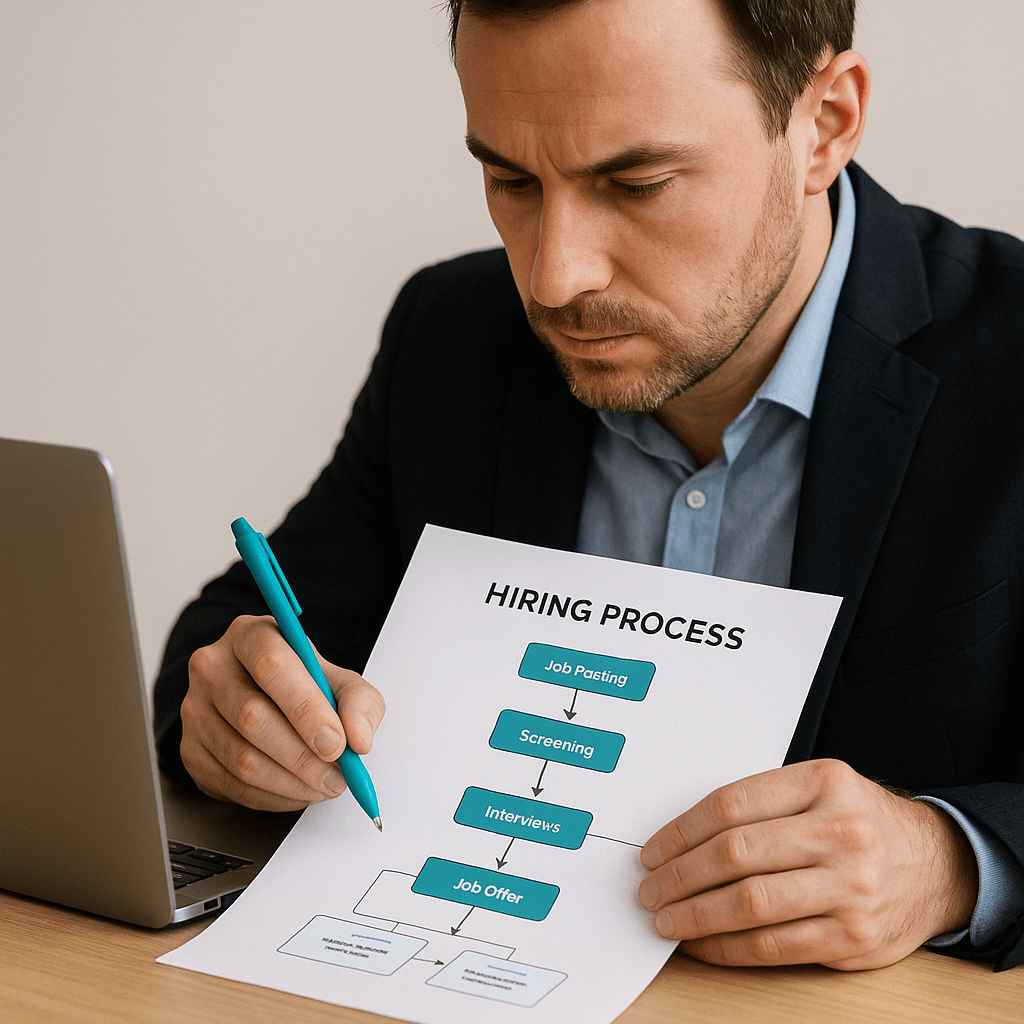
While HR should not lead your hiring strategy, their expertise is still essential in:
- Ensuring compliance with EEOC, anti-discrimination, and labor laws
- Reviewing employment agreements and offer letters for accuracy
- Handling onboarding logistics, employee benefits, and administrative setup
- Supporting performance documentation and disciplinary processes post-hire
In this partnership model, TA drives the strategy, candidate pipeline, and decision-making, while HR provides compliance support and manages employee-related operations—one does not replace the other.
Final Insight for CEOs and Leadership
If hiring is treated as a sub-function within HR, business growth will stall. Building winning teams requires the same strategic attention as developing a new product or expanding into a new market.
You wouldn’t outsource your organizational revenue strategy to your legal department. Likewise, don’t realign your most important growth lever—talent acquisition—under HR. Give recruitment its own seat at the leadership table, with a direct channel to company objectives.
Internal Resources & Next Steps
To build a best-in-class hiring process, consider leveraging:
- Applicant Tracking System for optimized candidate management
- Candidate Scorecards for structured, bias-free evaluation
Want expert advice customized to your organization’s specific challenges? Schedule a free demo with our hiring experts today and see how a recruitment-led approach can help you attract, engage, and secure the best talent in your industry.
Content