



When most people think of recruitment today, they imagine digital applications, job portals, and automated email notifications. But what happens when the talent you seek—specifically when you need to hire walk-in laborers—doesn’t have an email address or basic computer skills? This is not a hypothetical challenge. One of our clients, a construction company, faced this exact situation and needed a practical, tech-free solution.
The Client’s Challenge: Hiring Skilled Laborers Without Tech Access
Recruiting skilled workers is critical in industries like construction, manufacturing, and hospitality. Especially when you’re trying to hire walk-in laborers, your approach needs to be adapted to their level of tech access and comfort. However, great candidates in these sectors may not have an email, may not be computer-literate, or might simply prefer a more direct approach.
A client recently asked:
“What’s the best way to use your program for walk-in referrals applying as laborers, when they lack email access or computer skills? What assessments can help us find reliable hires?”
This real-world scenario underscores a key truth: Smart hiring strategies must include people who fall outside the digital mainstream.
Overcoming Digital Barriers: Our Creative Approach

Instead of forcing candidates into a typical, tech-heavy process, we designed a solution centered on accessibility and ease of use.
1. Using Placeholder Emails to Open Doors
Some recruitment platforms require an email address during the application process. However, the system doesn’t demand a valid, monitored email—just a unique identifier. To keep things moving:
- Create unique, non-active emails (e.g., [email protected]) for applicants.
- Avoid generic names that might be in use, to prevent conflicts and confusion.
- This allows your internal workflow to continue without leaving applicants behind.
Tip: Use consistent naming conventions for placeholders so your HR team can track them but avoid overlaps.
2. Leveraging QR Codes for Non-Digital Candidates
To ensure walk-in applicants can access necessary information without navigating complex digital forms:
- Generate a QR code that links directly to a simple, mobile-friendly application page. These codes can be posted at your front desk, printed on flyers, or displayed at job fairs. Tools like Canva, or other trusted QR code generators, make this step quick and free.
- Most candidates—even if they don’t use computers daily—have access to a smartphone or know someone who does. With just a quick scan, they’re taken to a minimalist application.
And for many low-skill or offline workers, research suggests that reducing complexity in job search processes can lead to significantly better employment outcomes, particularly when paired with targeted nudges and structured guidance, as shown in this NBER working paper.
3. Keeping Internal Job Postings Clear and Concise
When posting internally for walk-in applicants:
- Limit titles or descriptions to under 100 characters.
- Avoid sharing externally, which can confuse candidates and lead to unnecessary applications for other roles.
- This method is perfect for tracking, especially with roles that aren’t advertised widely.
4. Selecting the Right Assessments for Non-Digital Applicants
Digital literacy should not be a prerequisite for employment. Instead, focus your assessments on essential qualities such as reliability and integrity. For this client, we recommended the IntegrityFirst assessment—an evaluation that:
- Prioritizes integrity, honesty, and work ethic
- Avoids technical jargon or computer-heavy tasks
- Yields actionable insights for managers, without alienating capable candidates
Why This Solution Worked
This process took less than 30 minutes to implement, and it was instantly effective. Candidates walked in, completed applications without struggling with technology, and moved seamlessly into assessments. These tactics proved to be a powerful way to hire walk-in laborers quickly and fairly. The client reduced hiring friction and successfully managed to hire walk-in laborers who otherwise might have slipped through the cracks.
Key Takeaway: Technology should enable—not prevent—talent acquisition. Your hiring process must adapt to people, not vice versa.
Tactics for Inclusive, Efficient Recruitment to Hire Walk-In Laborers
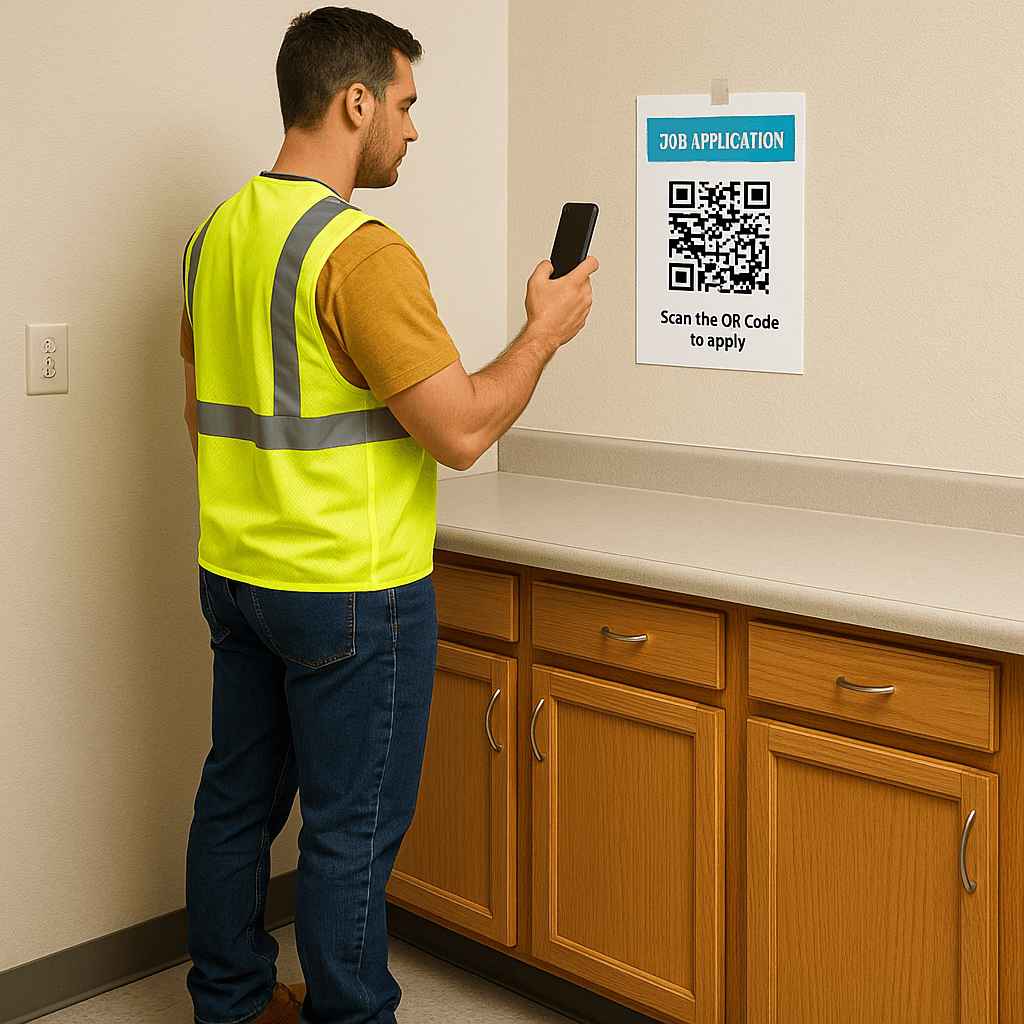
Inclusive recruitment is about meeting candidates where they are—whether they’re applying online, by phone, or in person. Here are broader tactics to consider, especially for companies recruiting walk-in laborers or those without digital access:
Provide Alternative Application Methods
- Keep paper forms available for candidates who prefer or require them.
- Offer staff support during in-person application sessions to guide those unfamiliar with digital tools.
Encourage Employee Referrals
- Leverage an employee referral system to encourage your current workforce to bring in trusted talent. This is especially powerful in industries with tight-knit professional communities.
Use Simple Assessment Tools
- Use survey or checklist-style assessments that are easy to administer either on paper or through mobile-friendly web forms, ensuring candidates are tested on relevant skills and traits.
- Consider hands-on skills assessments—for example, a brief on-site test or demonstration—which can replace complex, digital evaluations for labor-intensive roles. For organizations seeking more advanced analysis, employee assessment software can help you benchmark soft skills, even for nontraditional candidates.
Offer Support and Flexibility
- Assign HR liaisons or hiring coordinators who can help walk-in applicants with every step.
- Be open to flexible interview times, or allow phone screenings when digital scheduling is not possible.
Table: Quick Steps for Hiring Walk-In Laborers Without Email or Computers
| Step | Action | Outcome |
|---|---|---|
| Placeholder Email | Assign unique, fake email | Start application process |
| QR Code Application | Generate and display QR code | Quick mobile access |
| Short Job Posting | Internal, under 100 chars | Fewer errors, easy tracking |
| Simple Assessments | Use integrity, work ethic tools | Relevant candidate insights |
| Paper Forms | Offer as backup | Zero digital barriers |
| Liaison Support | Guide applicants on-site | Positive candidate experience |
Additional Resources and Best Practices
- For companies hiring at scale, consider integrating an Applicant Tracking System to organize and manage diverse application sources, including walk-ins.
- Learn more about creating accessible career pages to ensure your company remains open to candidates at all digital skill levels.
The Value of Adaptable Recruitment Processes
Building an inclusive hiring workflow isn’t just an ethical choice—it’s a strategic advantage. By reducing unnecessary barriers, you gain:
- Access to a broader talent pool
- Faster fill times for urgently needed roles
- Higher retention due to better-fit hires
- Improved community reputation as an employer of choice
These benefits compound over time, strengthening your workforce and positioning your company as a leader in social responsibility and operational agility.
Final Thoughts: Bring Everyone Into the Hiring Funnel
Not every candidate has the same digital resources. So if your goal is to hire walk-in laborers consistently, your process needs to meet them where they are. The most effective recruiters are those who innovate: adapting, simplifying, and ensuring nobody is needlessly excluded from valuable work—and your organization benefits in kind.
Ready to optimize your recruitment process for all candidates? Schedule a free demo with our hiring experts to see how our flexible recruitment solutions can serve every segment of your workforce.
Content