
Hiring today isn’t just about filling seats. It’s about doing so fairly—giving every qualified candidate a real shot regardless of their background, identity, or life history. That’s the core of hiring done right. But what does that actually look like in practice?
In this guide, we’re breaking down what fair hiring truly means, why it matters more than ever, and how to build a system that reflects it.
What Is Fair Hiring, Really?

Fair hiring means designing your recruitment process to reduce bias, promote inclusion, and evaluate candidates based on merit, not assumptions or stereotypes.
It’s not just about compliance with laws like the Fair Hiring Act or EEOC guidelines. It’s about recognizing that great talent doesn’t come in one shape, school, or story—and structuring your recruitment process accordingly.
This includes:
| Core Principle | What It Looks Like |
| Equal Opportunity | Posting jobs where all qualified candidates can see them |
| Inclusive Evaluation | Using structured interviews and scorecards |
| Transparency | Explaining decisions, timelines, and expectations |
| Compliance | Meeting standards like EEOC and state-level fairness laws |
For a deeper dive into legal aspects, check out:
👉 The Fair Hiring Act (USA)
👉 EEOC Compliance in Hiring
Why Fair Hiring Matters to Every Business
Aside from being the ethical thing to do, fair hiring delivers real-world benefits:
- Better talent: You’ll find hidden gems that traditional filters would’ve missed.
- Diversity of thought: Diverse teams outperform homogeneous ones on innovation and problem-solving.
- Risk reduction: Avoid lawsuits or bad PR from discriminatory practices.
- Cultural growth: Build a workplace that reflects real-world diversity.
Leading companies understand this. In fact, 10 US Companies Leading the Way in Fair Chance Hiring are already reaping the rewards of inclusive recruitment.
The 5 Pillars of a Fair Hiring System

Let’s walk through the practical parts of implementing fair hiring.
1. Use Structured Interviews
Unstructured interviews lead to bias and inconsistency. Tools like Interview Guides and Candidate Scorecards help you stick to proven best practices—same questions, consistent scoring, repeatable success.
Related: Fair Hiring Practices Every Employer Should Follow
2. Implement One-Way Video Interviews
Instead of relying on schedule coordination and first impressions, let candidates record interviews on their time. The One-Way Video Interview tool on Discovered enables fairer evaluations across more applicants, without scheduling chaos.
3. Embrace Fair Chance Hiring
Don’t eliminate qualified candidates due to past mistakes or unconventional resumes. Fair chance hiring is about assessing a person’s present capability, not just their past. n fact, recent policy briefs highlight how employers benefit when they open doors to justice-impacted individuals, especially when supported by structured hiring practices and assessments (source).
Learn more in:
👉 What Is Fair Chance Hiring?
👉 Understanding Fair Chance Hiring Laws
4. Track Data for Continuous Improvement
Fair hiring isn’t a one-time checklist—it’s ongoing. Use your ATS to track pass-through rates, diversity metrics, and scoring gaps. Then adapt. The Hiring Fairness Compliance guide can help you build your tracking framework.
5. Use Pre-Employment Assessments
Validated assessments measure real capability, not assumptions. Tools that test cognitive ability, work behavior, or integrity help remove guesswork and bias from hiring decisions.
Want to know how AI fits in? See: Can Automation Make Hiring Fairer?
How to Build a Fair Hiring Culture
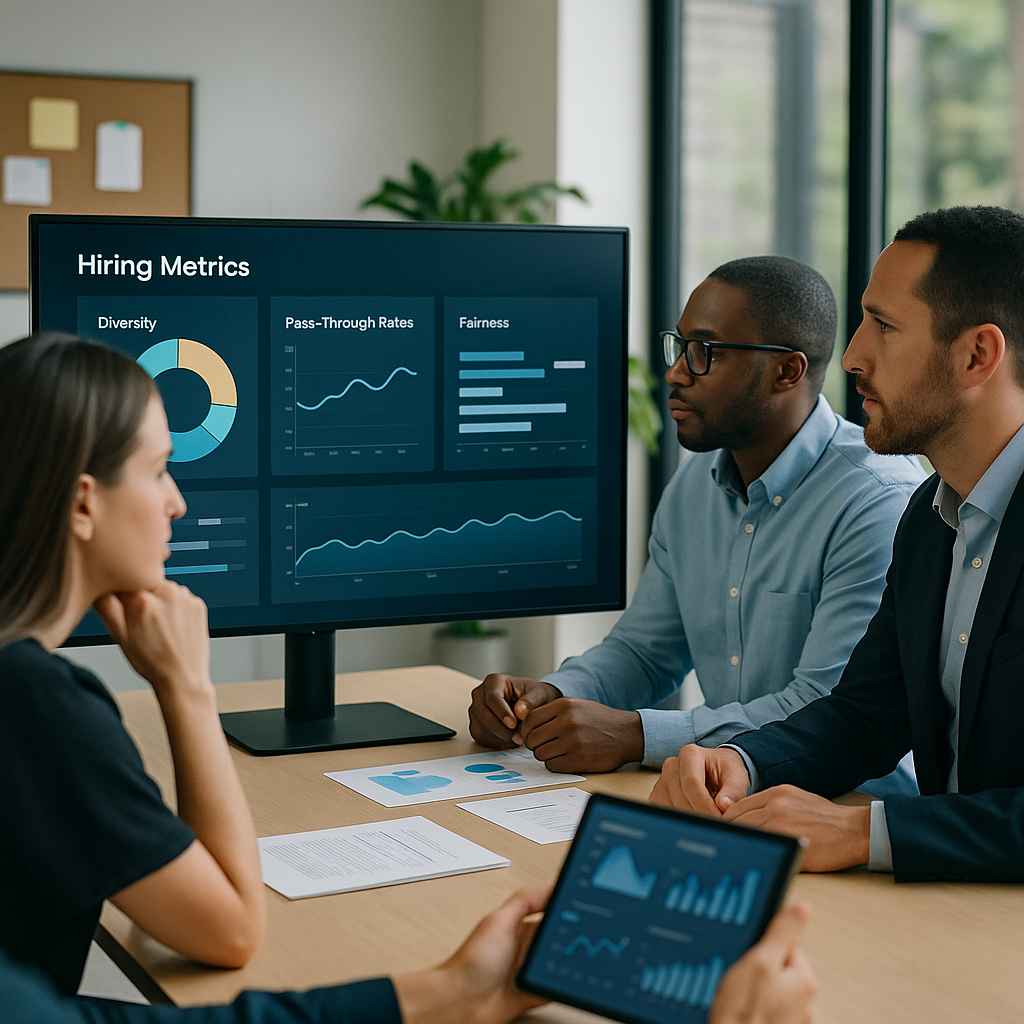
You can have the right tools and still fail if your hiring culture isn’t on board. Here’s how to embed fairness in your team mindset:
| Practice | Action |
| Train hiring managers | On structured interviewing and bias awareness |
| Standardize your policy | Use a Fair Hiring Policy Template |
| Encourage accountability | Use scorecards and collaborative hiring |
| Build an inclusive funnel | Start with job descriptions and sourcing strategy |
Fair hiring also applies to your post-hire decisions. If you want to grow fairly, you need fair evaluations, onboarding, and promotions too.
Related Pages
- Reducing Bias in Hiring: 5 Practical Strategies That Work
- What Makes a Fair Hiring Agency?
- Top Fair Chance Hiring Practices
- Fair Hiring in Banking
- How to Build a Truly Fair Hiring Organization
FAQ
Q: Is fair hiring just about legal compliance?
Not at all. Compliance is the baseline. Fair hiring is a competitive edge—it helps you find better talent and build stronger teams.
Q: Can small businesses implement fair hiring?
Yes, absolutely. Even without big HR departments, small businesses can use structured interviews, scorecards, and fair sourcing practices.
Q: What if I already have a diverse team?
That’s great! But fair hiring isn’t just about diversity—it’s about making sure your process is equitable for every candidate, at every stage.
Final Thoughts
Fair hiring is no longer optional—it’s the standard for ethical, competitive companies. It’s not just about who you hire; it’s about how you hire.
When you structure your process with fairness in mind, you do more than reduce bias—you open doors to talent you never would’ve found otherwise.
If you’re ready to make hiring fairer and more effective, Discovered can help you get there.👉 Book a demo to see how our platform supports every stage of your fair hiring journey.
Content