

The excitement around predictive analytics in ai recruiting is everywhere. Promises of “AI doesn’t sleep” tools that screen resumes round the clock are hard to resist. But the reality for HR pros is often more complex. While these platforms can streamline resume screening and improve candidate assessment, many worry about trading one headache for another such as hidden bias.
If you’ve ever stared at your dual-monitor setup late at night uncertain if the newest AI-powered hiring tech will finally help you move the needle on your most important recruitment objectives, you’re not alone.
Modern recruitment automation makes it easier to manage reqs at scale—AI recruitment explained shows how it’s transforming hiring end-to-end. However, it’s not a silver bullet for building a stronger talent pipeline. For instance, as Josh Bersin notes, we need AI to augment great recruiters.
So, whether you’re exploring machine learning recruitment or looking for better candidate matching, the real strategy is combining data-driven recruitment with human intuition. It’s about turning AI into your partner, not just another buzzword.
What Is Predictive Analytics in AI Recruiting?
Predictive analytics in ai recruiting is the use of machine learning and advanced hr technology to assess historical data and forecast future hiring outcomes. This approach moves beyond standard recruitment analytics by identifying complex patterns in candidate assessment and resume screening. Instead of relying on past averages, these tools anticipate which applicants will succeed and stay, improve time-to-hire, and optimize your entire hiring process.
Unlike traditional hr analytics tools, which report what happened, predictive analytics in ai recruiting tells you what’s likely to happen next. Talent acquisition specialists use these predictive models to spot job-hopper radar signals and prioritize candidate matching.
For instance, after reading Work Rules! by Laszlo Bock, many recruitment pros started seeking more insight-driven hiring strategies focused on data-driven recruitment. Modern recruitment automation now makes it easier to fine-tune candidate ranking and ensure every hire aligns with your organization’s talent management and succession goals. That is the difference between static reporting and real, actionable recruiting intelligence.
How Predictive Analytics Is Used in AI Recruiting
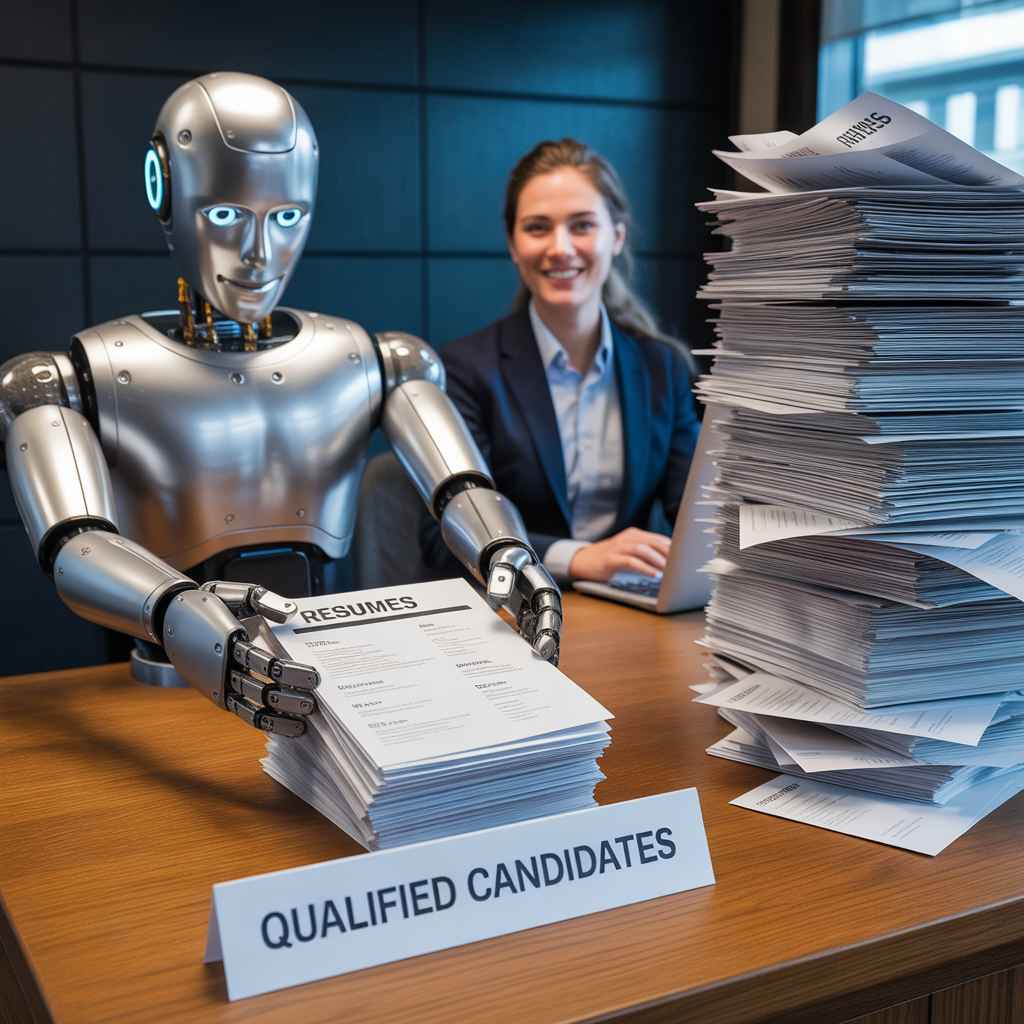
Imagine waking up to find your toughest reqs filled and your candidate pipeline strong. With predictive analytics in ai recruiting, this scenario can move from wishful thinking to daily reality. Reid Hoffman didn’t build LinkedIn’s network overnight.
Data-driven recruitment makes meaningful progress faster and smarter for recruitment teams ready to embrace change. Put candidates through the funnel with confidence, backed by talent analytics that actually drive hiring process optimization, not more busywork.
1. Automated Resume Screening and Candidate Ranking
AI recruiting lets you upload a stack of resumes then applies machine learning recruitment techniques to screen and rank them in seconds. Instead of just looking for keywords, predictive models weigh skills and experience.
You could screen 1,000 applicants overnight with AI recruiting tools, freeing recruiters for real candidate assessment. Automating this critical stage drives recruitment efficiency and helps avoid the resumé black hole for great fits.
2. Proactive Talent Sourcing and Workforce Planning
Talent management now means always planning ahead, not just backfilling. Predictive analytics helps teams spot trends and anticipate hiring needs before business leaders raise a flag.
For example, ai hiring tools can analyze growth data and attrition prediction to create a proactive recruitment force. You might identify a need for niche skills six months out, giving you runway to build your talent pipeline now. Learn how AI in the hiring process adds efficiency without losing the human touch.
3. Predictive Turnover and Retention Analysis
Machine learning recruitment isn’t just about filling open roles. Using data collection in hr, predictive analytics can identify which high-impact employees are flight risks. This empowers your retention strategy, targeting interventions before staff churn disrupts momentum. You can develop bench strength and keep your employer brand strong by acting before your best people walk out the door.
4. AI-Driven Candidate Matching and Fit Assessment
Automated applicant matching uses algorithmic hiring to predict fit not just on paper but for team culture. This means you don’t waste cycles on looking for purple squirrels when strong talent is ready to move the needle for your business today.
Performance prediction features also give you a clearer path to hiring for impact, not just pedigree.
5. Recruitment Marketing and Experience Optimization
It’s now possible to monitor recruiting metrics in real time and adjust your outreach strategies for better candidate experience. Data-driven decision making uncovers which recruitment marketing channels yield top applicants.
With the right ai platforms for hr, you can continuously refine engagement efforts, decrease candidate drop-off, and sharpen your hiring strategies every quarter.
Key Benefits of Predictive Analytics in AI Recruiting
Empowered by advanced hr technology, you’re about to move the needle on every hiring metric that matters: from talent management to workforce planning.
Recruitment teams find that data-driven recruitment, when supported by the right ai hiring tools, yields both short and long-term dividends. SmartRecruiters, for example, demonstrates how automating candidate matching boosts recruiter productivity and strengthens the golden thread between performance prediction and real hiring outcomes.
For candidate engagement, adding tools like an AI recruiting chatbot can further streamline hiring and reduce turnover.
Predictive Analytics in Action: Real-World Case Studies
A global fintech’s tale says it all: facing rising staff churn and competitive talent markets, their HR team swapped gut-feel hiring for Greenhouse’s predictive analytics tools. Like swapping dress shoes for smart casual sneakers, suddenly, comfort and speed were part of the daily routine.
AI-powered hiring changed their game, showing what happens when predictive analytics in ai recruiting meets seasoned recruitment expertise.
Improved Time-to-Fill With Automated Screening
Greenhouse implemented automated resume screening and candidate ranking, reducing average time-to-fill from 38 to 21 days. Smart ai hiring tools handled applicant evaluation at speed, giving recruiters more room for high-value workforce planning. This data-driven recruitment process delighted both managers and new hires.
Retention Gains From Attrition Modeling
Another Fortune 500 company worked with IBM to launch machine learning recruitment models focusing on employee turnover prediction. Their predictive models identified at-risk roles months in advance, allowing HR to tailor retention incentives. Over two quarters, employee retention improved by 12%. Corrective action plans are aligned with broader talent management.
Diversity and Matching in Action
A SaaS recruitment software vendor (Lever) analyzed automated candidate matching for a healthcare provider. This AI-driven assessment led to a 28% increase in diversity hiring by minimizing human bias. However, low data hygiene sometimes created filter fail issues, showing that optimizing hr data quality remains essential for predictive hiring success.
True, these stories shine. But challenges persist. For example, letting algorithms reign unchecked resulted in filter fail where quality candidates slipped through.
As always, it takes ongoing model validation and collaboration between HR and tech to move the needle, keep data cleaning processes tight, and ensure the golden thread from hiring strategies to business outcomes.
Ready to move the needle on AI recruiting?
Test-drive top hr technology tools with your team or book a demo with a talent management expert. Empower better hiring strategies today.
How to Implement Predictive Analytics in Your Recruiting Process
Getting predictive analytics in ai recruiting right can feel like seeing the clouds part after a week of stacked interviews. Every recruiter knows that sense of relief when a tool actually works, spotlighting predictive hiring opportunities that drive hiring process optimization and real recruitment efficiency.
Following Meghan M. Biro’s playbook, a crisp implementation plan ensures analytics become the golden thread of your talent acquisition strategy. Instead of another data-rich dashboard clogging your workflow.
1. Assess HR Data Quality and Readiness
Clean, accurate data is foundational to successful ai recruiting. Start by auditing your data collection in hr and fixing inconsistencies. Strong data hygiene supports candidate assessment and benchmarking candidates. Good data makes every downstream automation task smoother, from resume screening to applicant evaluation.
2. Choose and Benchmark Analytics Tools or SaaS Platforms
With many hr technology options, focus on solutions offering seamless ATS integration and transparent reporting. Use third-party comparisons for ai vendor selection that matches your recruitment objectives and skills-based hiring needs.
3. Integrate With Your ATS or HRIS System
Integration between your predictive tools and ATS drives recruitment automation and ensures your single source of truth is always up-to-date. Align workflow mapping with workforce planning efforts to automate candidate matching and recruitment analytics reporting at scale.
4. Train Your Recruiting Team on Analytics and AI
Upskill your in-house recruiters so they understand predictive hiring and model validation basics. Short LinkedIn Learning HR courses make ai-driven assessment less daunting, empowering your team to move the needle with data-driven decision making.
5. Build, Test, and Revalidate Predictive Models
Regularly test your models for bias reduction and fairness. Use checklists like those from Brookings to meet ethical ai in hr standards.
6. Monitor, Iterate, and Report on Key Metrics
Set up quarterly reporting cycles for metrics such as time-to-hire, candidate experience and diversity hiring. Tighten your approach by acting on real-time data and lessons learned from continuous model improvement.
Limitations, Risks, and Ethical Concerns
When a global retail giant rolled out ai recruiting with little oversight, their HR team wound up scaling the talent mountain only to realize filter fail was just as real as before. Only now it was algorithmic.
Even their sharpest talent acquisition pros in blazer jackets couldn’t move the needle if applicant evaluation was skewed from the start. Predictive analytics in ai recruiting is powerful; however, risks multiply if adoption outpaces HR decision-making and ethical guidelines.
Even the top hr technology can’t run on autopilot. Keep data cleaning and model validation at the core of any implementation. For example, you might spot recruiting bias creeping in if you track data hygiene consistently and apply regular auditing.
That’s how you future-proof a predictive hiring strategy while protecting your brand and candidate experience. Even the best tools come with risks—see the full pros and cons of using AI in hiring before rolling out predictive analytics.
Best Practices for Bias Reduction and Model Validation

You could future-proof your hiring strategies and boost stakeholder confidence with reliable, bias-resistant predictive analytics in ai recruiting. For instance, adopting methodologies outlined by Stacey Harris, you’ll move the needle on both compliance and candidate experience. Collaborative transparent routines safeguard against data-rich insight-poor outcomes that can plague ai hiring tools.
- Routine Model Audits: Schedule quarterly reviews with human oversight for structured feedback and fairness checks.
- Retrieval-Augmented Generation (RAG): Embed context to minimize AI hallucinations and enhance model accuracy.
- Blind Hiring: Remove identity data before evaluation to curb unconscious bias.
- Collaboration: Work closely with IT for model validation and unbiased algorithmic hiring.
- Transparent SaaS Vendor Selection: Prioritize vendors who publish regular performance and bias audit results.
- Avoid “Black Box” Reliance: Middleware models must be tested with recruiter input and validated against recruiting bias.
Applying these recruitment analytics and hr technology best practices delivers better stakeholder communication, more equitable hiring outcomes for today’s forward-thinking talent management teams.
Key Features to Look for in AI Recruiting Tools
Nearly 60% of organizations adopting ai recruiting cite better hr technology integration as their top requirement. If you want to move the needle on your hiring strategies, focus on solutions that provide candidate experience wins and measurable recruitment efficiency. Follow guidance from John Sumser, who advocates transparency and ethics.
- ATS/HRIS Integration: Ensures data-driven recruitment workflows sync with your existing tech stack and support hiring process optimization.
- Transparent, Customizable Models: Look for predictive analytics in ai recruiting tools that offer explainable models and bias reduction features.
- Blind Hiring: Enable skills-based hiring for fairer talent acquisition. Structured interviewing can further support objective candidate assessment.
- Real-Time Dashboards: Get snackable insights for benchmarking candidates and workforce planning.
- Continuous Model Improvement: Automated performance prediction tracking keep your predictive models sharp and compliant. Human-in-the-loop feedback further enhances accuracy.
- Data Privacy and Security: Prioritize tools that meet data privacy recruitment standards while allowing for access controls.
- Diversity and Inclusion Analytics: Measuring DEI hiring objectives is non-negotiable for ethical ai in hr operations. This is essential for future workforce needs.
A good AI recruitment platform ensures ATS/HRIS integration and transparent reporting for better predictive insights.
Maximizing ROI: 7 Snackable Metrics for Predictive Hiring Success
It might sound surprising, but not every KPI is worth tracking in your predictive analytics in ai recruiting dashboard. The real ROI comes from tailoring snackable insights to the KPIs that shape talent management and organizational development.
When you “put candidates through the funnel,” you’ll focus your hr technology on what actually moves the needle for recruitment efficiency. Even Josh Bersin calls this discipline critical as the age of data-driven recruitment matures.
1. Time-to-Hire and Cost-per-Hire
Measure total days and costs from req open to accepted offer. Predictive hiring tools flag bottlenecks and suggest hiring process optimization moves.
2. Sourcing Channel Effectiveness
Understand which platforms fill your talent pipeline. ai recruiting analytics pinpoint high-yield job boards, boosting proactive recruitment and hiring strategies.
3. Quality-of-Hire Score
Go beyond resume screening. Model performance prediction using onboarding and HRIS data. Track early attrition prediction and apply skills-based hiring benchmarks for continual improvement.
4. Candidate Experience (NPS)
Gather real feedback through surveys. Automated mapping of candidate drop-off highlights where ghosting candidates impact your process.
5. Conversion Rates by Stage
Monitor every workflow stage: application and interview. Predictive models pinpoint drop-offs for smarter workforce planning.
6. Diversity and DEI Targets Met
Ensure you’re meeting diversity hiring goals with transparent measurement and DEI dashboards. Recruitment analytics drive data-driven decision making and ethical ai in hr adoption that is visible to all stakeholders.
7. Staff Churn/Turnover Prediction Accuracy
Measure how often AI-driven assessment flags and prevents staff churn. The better your turnover prediction, the more reliable your bench strength and future workforce needs forecasting.
Future Trends in Predictive Analytics for Talent Acquisition
Picture a talent acquisition team using ai recruiting dashboards on dual-monitor setups, sipping coffee as fresh candidate experience analytics stream in. Living this reality puts organizations ahead of the curve.
The most forward-thinking HR leaders use predictive analytics in ai recruiting to drive continuous model improvement and monitor model drift. With AI-powered hiring, machine learning recruitment tech refines every recommendation.
We’re seeing growth in sentiment analysis that benchmarks employer brand in real time. These analytics tools score cultural fit and power smarter resume screening. For employee retention, next-gen predictive models provide accurate attrition prediction. You won’t be blindsided by unexpected staff churn.
Operationally, the biggest trend is candidate-centric, ethical ai in hr. Systems are designed for full transparency and clear explainability. Teams are upskilling with LinkedIn Learning HR courses to translate all these insights into fair, proactive recruitment strategies. This signals the future of talent management is a blend of sharp people skills and ethical tech.
Content