

You know the pressure: top candidates drop off, vacancy costs mount and endless manual tasks slow your hiring to a crawl. The rush to fill roles without burning out your team or sacrificing quality can feel relentless, which is why many HR leaders now look for ways to reduce time to hire with AI while keeping hiring standards high. Any HR leader will tell you—finding top talent during peak hiring season is never easy.
AI promises speed. But does it really move the needle or just trade one pain for another? Reduce time to hire with AI means adopting automation without sacrificing the judgment and fairness that the best recruiters bring to the table.
Technology can streamline candidate sourcing and resume screening but tools alone don’t deliver strong hiring outcomes unless you balance efficiency with candidate experience. For a deeper understanding of how AI reshapes modern recruiting, see our guide on AI Recruitment Explained: Smarter Hiring with Artificial Intelligence.
This guide unpacks the truth, showing you exactly how AI cuts hiring time while keeping the human touch and fairness front and center. Here’s how to turn automation into your recruiting fast track without losing what matters: quality of hire and true candidate engagement.
Step 1: Map Your Recruitment Process and Identify Bottlenecks
Picture your latest hiring round: endless spreadsheets and recruiter burnout with candidates slipping through the cracks because key steps stalled for days. These gaps stall time to hire and make achieving hiring efficiency feel out of reach. Before jumping into AI recruitment, take a step back and map each stage of your recruitment process, from initial job posting to offer acceptance.
You might find resume screening piles up due to staff holidays or that your team is stuck playing email tag to schedule interviews. Tracking these pain points with time-to-hire data quickly reveals where bottlenecks cause the most disruption.
Drawing on approaches championed by Patty McCord, prioritize transparency and accountability at every phase. When you improve your pipeline hygiene, the practice of keeping every step clean and up to date, you prep your organization for effective recruitment automation.
Layer in candidate experience feedback and recruitment analytics to spot issues beyond obvious delays. Small tweaks, like automating status updates, can set you up to reduce time to hire with AI. Pinpoint the cracks now. You’ll lay the foundation for long-term talent management success.
Step 2: Automate Candidate Sourcing and Job Posting

You’re about to simplify your mornings and boost recruiter productivity. Imagine opening your laptop in the morning to see a lineup of right-fit profiles already gathered overnight. AI recruitment enables a true sourcing sprint. Outbound search and automated job postings all work in concert.
That’s the way to quickly improve time to hire, reduce time to hire with AI, and keep the hiring efficiency momentum going. If you’re comparing different tools for sourcing and posting automation, check out our roundup of Top AI Recruiting Software Tools Hiring Managers Should Know.
1. Select an AI Sourcing Tool
Start with recruitment automation tools that scan job boards and your existing talent pools. Don’t just rely on one channel. Use a mix that includes mainstream job boards and niche sites, depending on your role. Prioritize platforms that allow integration with your AI-powered ATS, so you enjoy seamless candidate pipeline automation. You might want SaaS recruitment software that supports a range of integrations as your team scales.
2. Set Custom Candidate Criteria
Avoid the resume spelunking trap by defining clear custom filters up front. Specify skills and must-have experience. Boolean search logic can empower AI-driven tools to zero-in on top of funnel talent efficiently. This approach screens for core skills and screens out unrelated backgrounds, saving hours for the whole recruitment team. Well-defined filters and knockout questions can also help with candidate assessment and reduce candidate pipeline leakage later.
3. Use Generative AI for Job Descriptions
Generative AI transforms job posting automation. You could use A/B tests to compare multiple job descriptions and see which attracts stronger talent or delivers better candidate experience. Tweak tone or benefits listed, and track which version performs best for each open req. Then, combine this data-driven approach with workforce analytics to refine future postings and maximize candidate engagement, offer acceptance, and fill rate.
Step 3: Use AI Resume Screening and Candidate Shortlisting
According to CNBC, up to 75% of resumes are never read by a human. AI does the heavy lifting. That means your recruiter team can speed to shortlist, but only if your process is smart about fairness. Whether you’re skimming resumes at your desk or reviewing candidates in bulk, balancing AI speed with oversight is critical for AI-powered hiring and recruitment process optimization. We break down more of the opportunities and risks in Pros and Cons of Using AI in Hiring: A Practical Guide.
| AI Tool | Task Automated | Time Saved | Risks | Bias Mitigation |
|---|---|---|---|---|
| Resume Parsers | Extract key data from CVs | Up to 80% vs manual review | Filters out non-traditional backgrounds | Include “human review escape hatch” |
| Candidate Ranking | Instant scoring and match | Up to 50% reduction in shortlist time | May favor keywords, miss soft skills | Calibrate on DEI data, audit regularly |
| Knockout Question Bots | Pre-screen for essentials | 1-3 days saved per role | Can miss context or nuances | Review questions annually for fairness |
AI resume screening boosts recruiter productivity and surfaces high-potential candidates in hours. Still, don’t fire and forget. Develop flexible workflows where a recruiter can step in or override the shortlist if you spot likely missed gems. That way, you get efficiency without compromising on candidate quality or experience.
Step 4: Streamline Interview Scheduling and Candidate Communication With AI
Picture this: you’re ready to interview a stellar candidate, then the auto-scheduler double-books, sends the wrong link or leaves them stranded waiting for a meeting nobody attends. No recruiter wants a painstakingly sourced purple squirrel getting lost due to calendar chaos. Yet, that’s exactly what messy workflows can cause. With the right AI-driven tools, you can reduce time to hire with AI, protect your quality of hire, and elevate your candidate experience. One way teams are achieving this is through conversational tools like AI Recruiting Chatbots, which streamline communication and cut down on drop-offs.
1. Deploy AI Scheduling Assistants
Choose AI interview scheduling tools that sync directly with both recruiter and candidate calendars. Look for systems that auto-suggest available times and manage time zones and interviewers. Automated reminders can dramatically reduce no-shows and last-minute cancellations. But don’t just fire and forget; monitor scheduling success and fix issues as soon as they arise. This helps prevent candidate ghostbusting in the process.
2. Automate Candidate Communication
Recruitment automation for candidate communication standardizes updates and cuts down on lag between interviews and offers. You could use AI-powered ATS platforms that auto-send personalized messages with interview details and next steps. This keeps inbox zero within reach and ensures positive engagement for every applicant. Segmenting by job family lets you further refine how and when messages are sent.
Ready to Speed Up Your Hiring Process?
Unlock recruiter productivity and speed up your talent pipeline with our all-in-one AI-powered hiring suite. Automate and elevate every stage of your recruitment process for true hiring efficiency. Book a demo now.
Step 5: Integrate AI-Powered Assessments and Structured Interviews
Structured interviews might sound less glamorous than the latest AI in HR fad, but when combined with AI-driven tools, they consistently raise the bar for hiring efficiency. They even outpace some automated assessments on both speed and fairness.
Smart recruiters know this approach doesn’t just reduce time to hire with AI, it also builds trust with hiring managers and candidates who value process transparency. This is much like the rigor William Tincup talks about on his influential HR tech podcast. Learn how AI in the Hiring Process: Efficiency, Insights, and Human Touch balances structure with fairness.
1. Combine AI Assessments With Human-Driven Structured Interviews
AI-powered assessments quickly evaluate technical or cognitive skills. You could deploy these early-on to filter your top of funnel, letting structured interviews dig deeper into behavior or culture fit. Don’t rely solely on the AI score. It may miss soft skills. Balance both to maximize candidate assessment insights. This integration doubles down on quality of hire.
2. Use Data-Driven, Consistent Interview Question Sets
Lean on structured interviews with standardized questions, leveraging AI to generate or sequence them. This creates a fair playing field while eliminating unintentional interviewer bias. For instance, behavioral interviewing can be turbocharged with candidate data, so interviewers ask relevant situation and task prompts (think: The STAR method). This process not only accelerates interviews, but also improves recruitment process optimization.
3. Routinely Calibrate and Audit Assessment Outcomes
Recruitment automation is not a set-it-and-forget-it solution. Regularly audit assessment data and interview scores for signs of bias. Use workforce analytics to spot outliers. Candidate feedback matters here. Solicit input to protect candidate experience and drive continuous improvement across your AI-powered hiring pipeline. These steps will help maintain your hiring efficiency and ensure sustained success.
Step 6: Use AI for Offer, Background, and Onboarding Automation
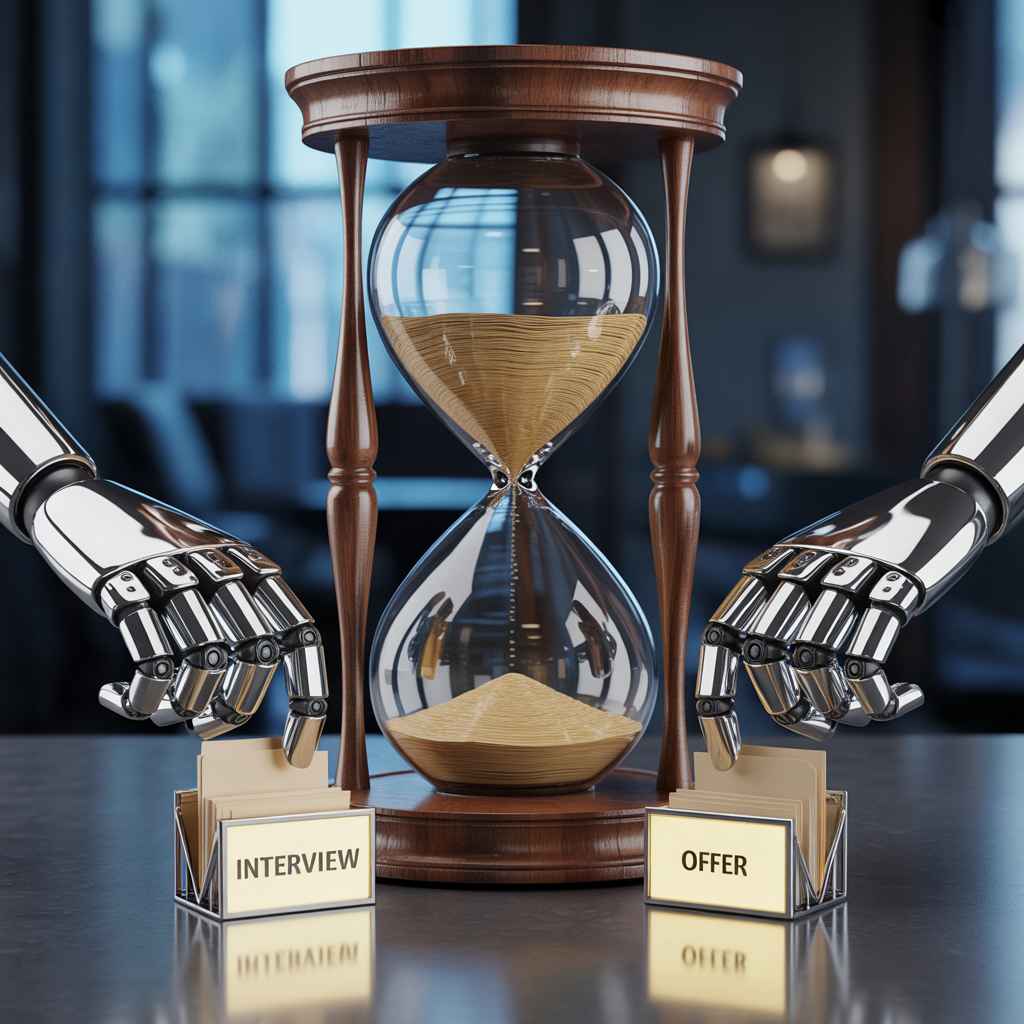
Amazing. You’ve found your ideal candidate, aced each interview, and zipped through reference checks. Instead of waiting weeks for HR paperwork and multiple approvals, your new hire receives their digital offer, instantly signs, and starts onboarding. All of this can happen before lunchtime. AI-powered hiring platforms make this type of recruiting efficiency a reality for modern HR teams, moving the needle on time to hire and employee satisfaction. For example, if you use AI-driven tools, bottlenecks at the offer stage can become a thing of the past.
Key Automations to Deploy:
- Digital Offer Letters: Streamline approvals and send out personalized offers instantly. Boost your fill rate and slash candidate drop-off risk.
- Salary Banding: Automate checks for pay equity and ensure compliance with compensation policies by using data-driven recommendations for each offer.
- Automated Background Checks: Trigger instant verification services, but always review potential red flags manually for compliance and candidate experience.
- Onboarding Scheduling: Save hours with AI onboarding scheduling, including digital paperwork and introductions to virtual mentors onboarding.
- Personalized Welcome Journeys: AI in HR helps new hires hit the ground running with tailored early experiences, boosting candidate engagement.
Moving smoothly through the final step doesn’t just reduce time to hire with AI. It locks in your quality of hire and keeps the momentum for future roles.
Step 7: Track Real-Time Results and Optimize With Recruitment Analytics
Recruiters using AI-powered ATS platforms with built-in analytics routinely improve hiring speed. But only 21% of HR teams use advanced analytics to maximize hiring outcomes. With AI recruitment, leveraging real-time dashboards gives you instant access to metrics you need for recruitment process optimization and hiring efficiency.
| Metric to Track | Why It Matters | AI-Driven Insight Example |
|---|---|---|
| Time to Hire | Pinpoint bottlenecks, reduce delays | See role-specific delays by recruiter |
| Offer Acceptance Rate | Track which roles or reqs need work | Get drop-off alerts, adjust process |
| Candidate Experience | Improve NPS and reduce attrition | Spot slow responses or candidate ghosting |
| Quality of Hire | Focus on lasting impact, not quick wins | Predict performance with workforce analytics |
Effective recruitment analytics aren’t just nice-to-have. They’re the backbone of every high-performing talent function. AI-driven tools can translate live data into clear priorities: which job ads need tweaking and where your candidate pipeline leakage happens
You could set automated alerts to help achieve inbox zero by flagging stale applications, closing the loop for candidate experience. Advanced tools also use Predictive Analytics in AI Recruiting to forecast candidate success and long-term performance.
Step 8: Pilot, Audit, and Expand Your AI Implementation
AI isn’t a magic bullet. You wouldn’t automate executive searches for senior leadership roles. For most roles, though, AI-driven tools offer a powerful way to reduce time to hire with AI and modernize recruitment automation. Start with a pilot focused on high-volume or repetitive roles like support or call center positions.
Once your pilot is live, set up clear “human review exits.” Let rejected candidates request a second look to protect candidate experience and avoid candidate pipeline leakage. Use recruiter feedback to refine your setup, address common blind spots like AI bias mitigation, or improve candidate ghostbusting.
Regular audits are non-negotiable. Monitor for bias and drop-off rates, especially after updating algorithms or adding new features. As you see hiring efficiency and time to hire metrics improve, you can expand AI-powered hiring into more advanced processes or senior roles.
Never leave transparency behind. Communicate when and how you use AI in HR with every candidate to boost trust and employer brand perception. If you’re ready to scale across your organization, see how an AI Recruitment Platform can unify your tools and strategy.
Content