Best Interview Questions for Superintendents and Project Managers
The best superintendent interview questions ask candidates to explain real decisions about sequencing, subcontractor coordination, safety, and crew leadership. Construction project manager interviews should also examine cost forecasting, changes, owner communication, and the handoff between field execution and project administration. In both cases, follow the answer beyond the outcome to understand what the candidate personally did.
A candidate may have worked on an impressive project without owning the decisions your opening requires. Another may describe a smaller job but demonstrate the judgment and follow-through you need. Use the questions below to investigate that difference, with a consistent set for everyone applying to the same role.
Define the Responsibilities Before Choosing Questions
A superintendent and a project manager may work through the same delay from different positions. One coordinates what happens on site, while the other may manage the commercial implications, approvals, and owner commitments. Your company’s division of responsibility matters more than the title alone, especially when one person covers parts of both jobs. To give both roles one shared hiring process, see our hiring software for general contractors page.
O*NET’s construction managers profile, updated in 2026, includes scheduling, supervision, quality control, cost reporting, and coordination with owners and design professionals. Use that occupational context to check coverage, then define what this particular employee will own. Do not assume that everyone with a superintendent title has held the same authority.
Before the interview, document the project types, complexity, decision boundaries, and working relationships involved. Decide which capabilities are essential on arrival and which can be learned with support. Our construction recruitment guide explains why those requirements belong upstream of candidate selection.
Choose a common core of questions for each opening and agree on what acceptable evidence looks like. The U.S. Office of Personnel Management’s structured interview guidance recommends predetermined questions and consistent rating standards. The questions and evaluation suggestions here are practical examples to adapt to your role, not a validated selection test.
Superintendent Interview Questions for Field Leadership
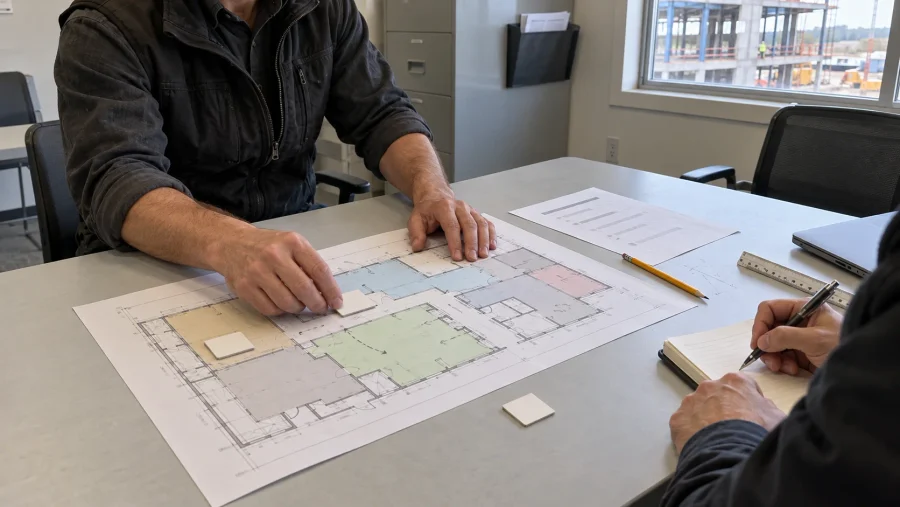
These superintendent interview questions focus on how the candidate plans, coordinates, and responds while work is underway. Ask for one specific project example and establish the candidate’s authority before judging the result. The following four questions cover different responsibilities rather than four versions of a schedule-recovery story.
1. Tell me about a week when your work plan became unworkable. How did you rebuild it?
Listen for how the superintendent identified the constraint, checked what work was ready, and coordinated an alternative. A strong answer explains the sequence and dependencies rather than saying everyone worked harder. Ask which materials, inspections, access conditions, or preceding activities determined what could move forward.
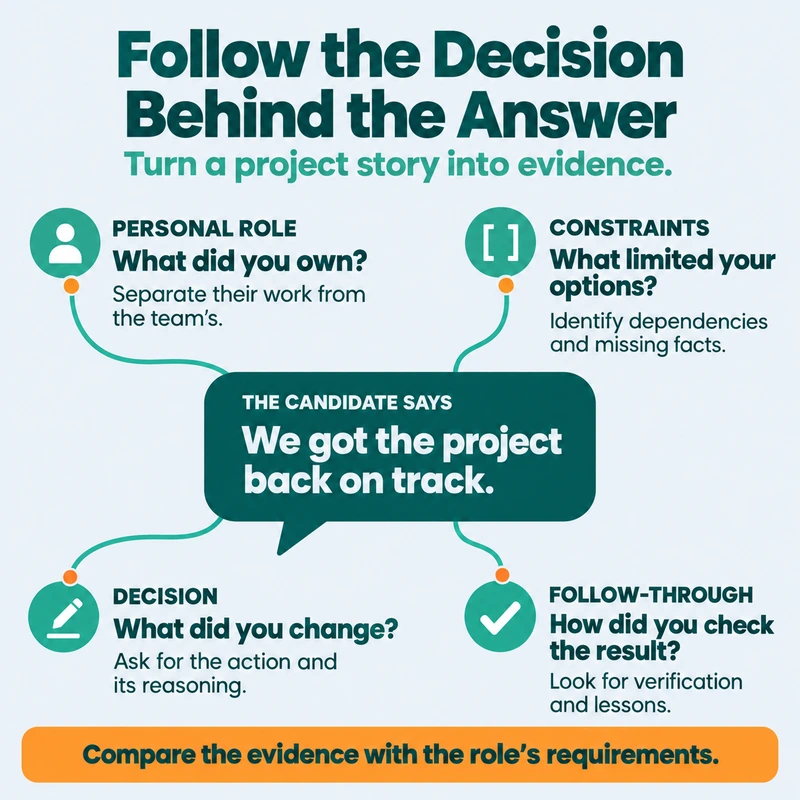
Follow up with, “What did you change personally, and how did you confirm that the new plan was working?” Look for an update to the plan and communication with affected parties, alongside an honest account of what remained delayed. A recovery claim without an explanation of the sequence leaves an important gap.
2. Describe a conflict between subcontractors over work areas or sequencing. How did you resolve it?
The useful evidence is how the candidate established the facts and coordinated the parties whose work depended on each other. Ask what each subcontractor needed, which constraints were real, and how the superintendent communicated the agreed plan. Merely describing a forceful personality does not establish effective coordination.
Ask, “What did you do when someone did not follow the agreement?” An informative answer covers follow-up, documentation, and escalation within the candidate’s authority. It should also distinguish an interpersonal disagreement from a coordination problem that required a different work plan.
3. Tell me about a safety concern that disrupted planned work. What happened next?
Ask what the candidate did when the concern was raised, how the relevant people assessed it, and how the work was controlled before proceeding. OSHA’s worker participation guidance emphasizes reporting concerns without retaliation and responding to those reports. An answer should therefore explain the response to the worker as well as the response to the hazard.
Follow up with, “Who determined the corrective action, and what did you communicate before work resumed?” Listen for appropriate involvement and a concrete follow-through process. A statement that the project had no incidents does not answer how the candidate handled the situation.
4. Describe a time you had to improve a foreman’s or crew’s performance. How did you approach it?
Establish what performance was falling short and how the candidate determined the cause. Useful answers separate unclear expectations, missing resources, insufficient skills, and behavior that needed correction. The response should explain what the superintendent changed or asked the foreman to change.
Ask, “What support did you provide, and what did you check afterward?” Look for specific feedback and evidence of subsequent performance, rather than a claim that people respected the candidate. For additional prompts to adapt, our superintendent interview guide covers planning, supervision, and communication.
Construction Project Manager Interview Questions for Project Control
These questions examine how the project manager connects execution with forecasts, decisions, and commitments. Establish the project delivery arrangement and the candidate’s responsibilities before comparing examples. Someone who supported a process should be able to describe that contribution without claiming authority they did not hold.
5. Tell me about a project where your forecast changed before the final cost was known. What did you do?
Ask which information revealed the change and how the candidate evaluated its effect on remaining work. An informative answer distinguishes money already spent, commitments, and the cost still expected to complete the project. It should explain how the forecast changed instead of relying entirely on the original budget.
Follow up with, “What did you recommend, who needed to decide, and what did you monitor next?” Listen for a traceable connection between the information and the decision. Do not require a favorable final result to recognize sound judgment under difficult conditions.
6. Walk me through a scope change from the first request to the project team’s final understanding.
Look for how the candidate clarified the request, identified affected work, evaluated schedule and cost implications, and followed the project’s approval process. Ask what the superintendent and subcontractors knew at each point. A polished change log is useful only if it reflects what was happening in the field.
Ask, “What happened if work was requested before the decision was documented?” Evaluate whether the candidate recognized their authority and followed the applicable contract and company process, including escalation where needed. The interview is testing judgment and coordination, not inviting a universal rule for every contract.
7. Describe a time you had to give an owner difficult project news. How did you prepare?
A useful example explains what the project manager verified, what was still uncertain, and which options could be discussed. Listen for timely communication that made the decision clearer, rather than delaying the conversation until a complete solution was available. Ask how the message aligned with information from the field.
Follow up with, “What did you commit to, and how did you track that commitment?” The answer should distinguish an update, a recommendation, and an approved decision. Our project manager interview guide offers additional general prompts; select the ones relevant to construction rather than importing unrelated methodology questions.
8. Tell me about a handoff or closeout problem you caught before it became somebody else’s problem.
Ask what was missing, how the candidate found it, and who needed the information next. Depending on the role, the example might involve unresolved changes, outstanding approvals, turnover documents, or unfinished commitments. The strongest detail concerns how the candidate established ownership and confirmed completion.
Follow up with, “What did you change so the same issue would be easier to catch next time?” Look for a practical improvement tied to the failure, not a promise to communicate more. This question also helps distinguish a person who keeps a list from one who makes sure the receiving party can continue the work.
Test the Handoff With One Shared Scenario
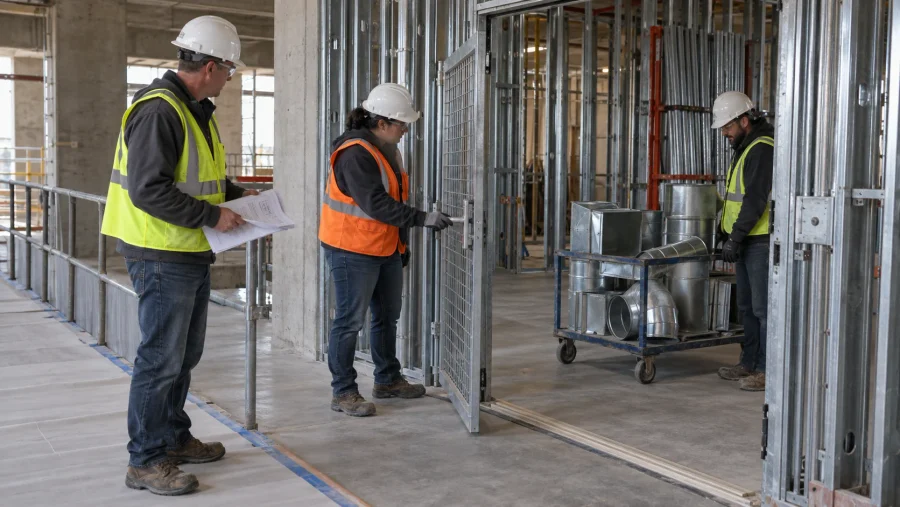
After reviewing past experience, use a short hypothetical exercise to see how the candidate organizes an unfamiliar problem. For example, a critical delivery slips by one week, two trades need the same work area, and an owner milestone is approaching. Give every candidate for that opening the same facts and time to consider them.
For the superintendent, ask what they would verify on site, whom they would involve, and how they would adjust the near-term sequence. For the project manager, ask what they would investigate about the milestone, forecast, approvals, and owner communication. In both interviews, ask what information they would need from the other role before committing to a plan.
Do not hide an essential fact and penalize a candidate for failing to guess it. A request for missing information can demonstrate judgment, while an immediate confident answer may rest on assumptions. The exercise should reveal the candidate’s reasoning and handoff, not produce a single scripted solution.
Compare Evidence Before Discussing Overall Fit
Agree on the criteria before interviewing and record relevant evidence while the conversation is fresh. Ask interviewers to assess responses independently before discussing the candidate together. Distinguish an incomplete answer from evidence that the candidate used poor judgment; sometimes an appropriate follow-up can resolve the missing detail.
The following is an illustrative evidence rubric, not a validated scoring model. Adapt it to the responsibilities and expected proficiency of the opening rather than applying an automatic pass score.
| Evidence level | What the response establishes | Useful next step |
| Limited | General statements, with personal responsibility or reasoning still unclear. | Use the planned probe to clarify the missing evidence. |
| Usable | A relevant example with a clear role, action, and explanation. | Assess it against the agreed job criteria. |
| Strong | A relevant example that also explains tradeoffs, follow-through, and lessons. | Check whether that depth matches the opening’s scope. |
Discovered’s candidate scorecards let teams define role-specific criteria, record ratings and comments, and compare evaluations. Use those capabilities to keep the evidence behind a recommendation visible. A consolidated score should support the discussion rather than replace unresolved questions about the candidate’s experience.
Our contractor hiring case study illustrates a broader process connecting role requirements, candidate information, and client feedback. The lesson for an interview is to make the recommendation traceable to the work required. A successful outcome in another recruiting engagement does not validate this question set.
The most useful superintendent interview questions and project manager questions help you understand the decisions the candidate can own, how they involve others, and what they follow through to completion. Preserve that focus when comparing candidates and confirming relevant experience through your other hiring steps. Explore our construction hiring software if your team needs a shared process for organizing those evaluations.
Frequently Asked Questions
Which superintendent interview questions should I prioritize?
Start with the responsibilities the person will own on your projects, such as planning, subcontractor coordination, safety response, and supervision. Ask for specific examples and use planned follow-ups to clarify the candidate’s actions, authority, and follow-through.
Should superintendents and project managers receive the same questions?
They can discuss a shared project scenario, but the questions should reflect each opening’s responsibilities. Keep the core questions and evaluation standards consistent among candidates applying for the same role.
What if a candidate’s example ended with a delay or cost increase?
Investigate what the candidate knew, what they controlled, and how they responded. A difficult outcome alone does not establish poor judgment, just as a successful project does not establish that the candidate personally made the key decisions.
Should candidates bring documents from previous projects?
Use a fictional exercise or invite a verbal explanation that avoids confidential details. Do not require candidates to disclose proprietary budgets, contracts, drawings, or other protected information to demonstrate their experience.
Content