HHA vs PCA is usually explained to families. For an agency, it is a hiring question: screen the wrong way and you take on compliance risk and care quality risk at once.
A home health aide (HHA) gives hands-on care and simple health tasks under a registered nurse and, in Medicare-certified agencies, must meet federal training rules. A personal care aide (PCA) helps with daily living and household tasks, with no clinical duties, under state rules. Screen HHAs for verified credentials and observed skills, and PCAs for reliability when working alone.
A bad match also costs money, as our breakdown of what caregiver turnover really costs a home care agency shows.
HHA vs. PCA at a Glance
The difference between an HHA and a PCA comes down to clinical scope, training, and supervision:
| Home health aide (HHA) | Personal care aide (PCA) | |
| Main focus | Hands-on personal care plus simple health tasks | Daily living support, household tasks, companionship |
| Medical tasks | Simple procedures tied to nursing or therapy, such as vital signs and prescribed exercises | None |
| Medications | Assists with medications the client takes on their own, more only if state law and nurse delegation allow | Reminders only, does not give medication |
| Training | At least 75 hours in Medicare-certified agencies | Set by each state and Medicaid program |
| Supervision | Assigned by a registered nurse with written care instructions | Agency supervisor, often directed by the client or family |
| Typical employer | Medicare-certified home health agencies | Non-medical home care agencies and Medicaid programs |
- Hire a PCA when the client is stable and needs help with routines, meals, errands, and company.
- Hire an HHA when the client needs hands-on care tied to a care plan, such as recovery after a hospital stay, safe transfers, or vital signs.
What Does a Home Health Aide Do?
Federal rules for Medicare-certified agencies, 42 CFR 484.80, define home health aide duties: hands-on personal care, simple procedures that extend nursing or therapy, help with walking and exercises, and assistance with medications the client normally takes on their own.
A registered nurse assigns each aide and gives written care instructions. The aide reports any change in the patient to that nurse, who reviews the aide’s work every 14 days for skilled-care patients and every 60 days for others. Your screen should test one thing above all: does this person follow a care plan exactly?
What Does a Personal Care Aide Do?
Personal care aide duties cover what Cleveland Clinic calls activities of daily living: basic tasks like bathing, dressing, and moving around, and instrumental ones like meals, shopping, and transportation. PCAs can remind clients about medication but do not give it.
The role is highly independent. In the 2025 BLS Occupational Requirements Survey, only 16.5% of personal care aides had a supervisor in their immediate work area, and 45.0% had to drive for the job.
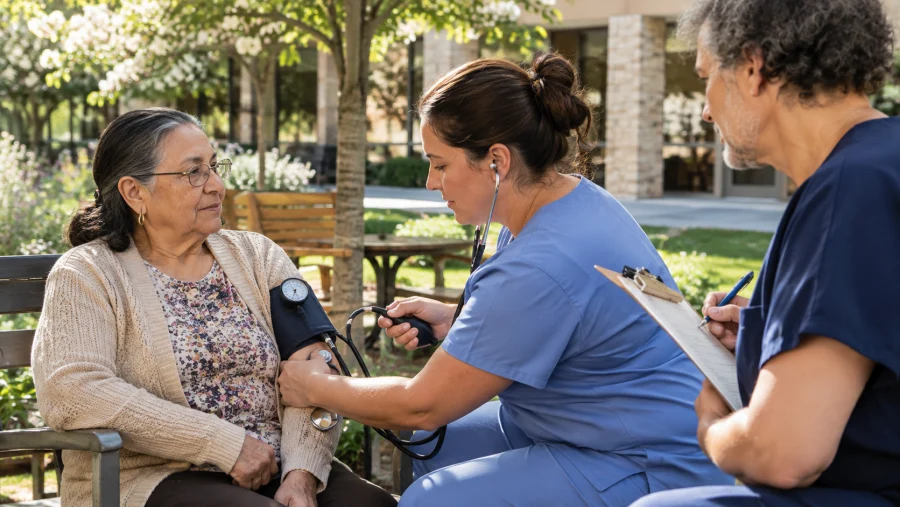
Home Care vs. Home Health: Which Aide Does Your Agency Need?
Home health is skilled, physician-ordered care. Medicare covers aide services only when the patient also gets skilled nursing or therapy, so Medicare-certified agencies hire HHAs. Home care is non-medical support paid privately or through Medicaid, and those agencies hire mostly PCAs. If you offer both, you need two screening tracks.
How to Screen a Home Health Aide
1. Verify Training and Recent Work
An HHA qualifies through a training and competency program (at least 75 hours, including 16 hours of supervised practice), a competency evaluation, a state licensure program, or a state-approved nurse aide program. Ask for the certificate and recent work dates: after 24 months without paid aide work, the aide must requalify.
2. Run Registry and Exclusion Checks
For candidates qualifying as nurse aides, a nurse aide registry check confirms good standing. Then search the OIG exclusion list (LEIE). Hiring an excluded person can lead to civil monetary penalties.
3. Complete a Caregiver Background Check
Follow the Fair Credit Reporting Act. As the EEOC explains, before rejecting someone based on a report, give them a copy and a summary of their FCRA rights. Discovered runs background checks without hiring delays in the same workflow.
4. Observe Hands-On Skills
Home health aide skills must be seen. A registered nurse evaluates vital signs, hygiene, safe transfers, range of motion, and communication by watching the aide with a patient or pseudo-patient. A custom skill test can cover the knowledge areas first, such as infection control and emergencies.
5. Check Safe Lifting
Back, neck, and shoulder injuries are the most common for home caregivers, per the American Academy of Orthopaedic Surgeons. Look for a straight back, bent knees, pivoting instead of twisting, and asking for help when needed.
How to Screen a Personal Care Aide
1. Check State and Payer Rules
Personal care aide requirements vary by state and Medicaid program. Confirm training, orientation, and background rules before the first visit.
2. Run the Same Background and Exclusion Checks
Use the same FCRA process and LEIE search. The EEOC rescinded its 2012 criminal records guidance on October 28, 2026, but fair chance laws still apply. California, for example, bars criminal history questions until after a conditional offer.
3. Assess Reliability Before the Interview
The qualities of a good caregiver here are dependability, patience, and judgment without a supervisor. A caregiver test from Discovered screening and assessments measures reliability first. See five science-based assessment strategies for what predicts performance.
4. Confirm Logistics and References
Ask about availability, transportation, and service area in the application. Then ask references about attendance and client care, reference and background checks can run together.
HHA and PCA Interview Questions
HHA interview questions should test care plan discipline. PCA interview questions should test boundaries and judgment:
| Role | Question | A strong answer |
| HHA | The care plan says to call the nurse if heart rate is over 100. It is 108, but the client feels fine. What do you do? | Calls the nurse, as the plan says. |
| HHA | Walk me through moving a client from bed to wheelchair. | Locks the wheels, explains each step, lifts with the legs. |
| HHA | You recorded a wrong reading yesterday. What do you do? | Tells the nurse and corrects the record. |
| PCA | A client asks you to hand her the right pills. What do you do? | Reminds her but does not choose or give medication. |
| PCA | Your client seems more confused than usual. What do you do? | Keeps the client safe and calls the agency. |
| PCA | Tell me about a time you were going to be late. | Called ahead early with a plan. |
For a full list, see our caregiver interview questions.
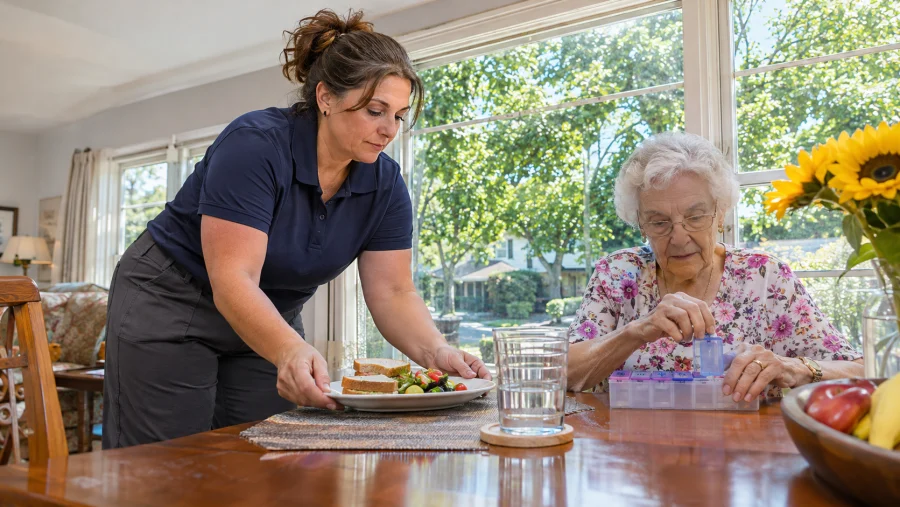
Two Roles, Two Screens, One Hiring System
Screening HHAs and PCAs the same way means over-screening one or under-screening the other. With Discovered, application questions check credentials and availability up front, automated follow-up reaches caregivers after hours, and assessments, background checks, and references run in one workflow across every branch.
Explore our home care hiring software, read what a healthcare applicant tracking system should do, or book a demo to set up both tracks.
Frequently Asked Questions
Is a PCA the same as a CNA?
No. A CNA completes a state-approved nurse aide program of at least 75 hours and is listed on the state registry, usually working in nursing homes or hospitals. A PCA provides non-medical care at home under state rules.
Which is better, CNA or HHA?
They fit different settings. Under federal rules, a CNA in good standing on the state registry can qualify as a home health aide, which makes CNAs a strong source of HHA candidates.
Can a home health aide give medication?
An HHA can assist with medications the client normally takes on their own. Anything more depends on state law and nurse delegation. In Washington, for example, aides can give insulin only after state training and delegation from a registered nurse.
Can a PCA work as an HHA?
Only after qualifying, for example by completing a home health aide training and competency program of at least 75 hours.
What background checks are required for caregivers?
It varies by state. Most agencies run an FCRA-compliant criminal check, check the state registries that apply, and search the OIG exclusion list if they bill Medicare or Medicaid.
Content