Hiring concrete workers starts with knowing which tasks require experience, which can be taught, and what the next crew assignment demands. To evaluate reliability and safety, ask candidates for specific work examples, confirm the actual reporting arrangements, and discuss how they respond when a task is unclear or a hazard appears. Combine those answers with relevant references and a realistic plan for supervision.
The pressure to fill a crew is understandable. In the September 2026 AGC and NCCER workforce survey, 42% of respondents reported project delays caused by shortages of their own workers or subcontractors’ workers. That is a construction-wide finding, rather than a measure of concrete crew attendance, but it helps explain why an open position can become an urgent operational problem.
A rushed decision can leave a foreman with the wrong mix of experience. An applicant may be a promising laborer without being ready to finish independently, while an experienced finisher may need different travel or scheduling arrangements than the project allows. A useful screening process makes those differences visible before the person joins the crew.
Define What the Crew Needs From This Hire
Begin with the foreman who will assign the work. Establish the type of project, the tasks the new person will perform, and how much instruction the crew can provide. A job description that asks for concrete experience without naming the work gives recruiters too little information to distinguish a suitable applicant from someone with only general exposure.
For a finisher, investigate comparable responsibilities. The Bureau of Labor Statistics describes cement masons and concrete finishers as placing and finishing concrete and using judgment about conditions that may affect the result. Ask the applicant to describe a recent project, what they personally handled, and which decisions belonged to the lead. Knowing the names of tools is a starting point; explaining their role in an actual project provides more substance.
For a laborer opening, specify the support work and training involved. Depending on the assignment, that may include preparing an area, moving materials, supplying tools, or cleanup under direction. Decide which abilities are necessary at entry and which the employer will teach, rather than importing every requirement from a finisher’s job description.
An applicant without concrete experience may still offer relevant evidence from another job. A warehouse or maintenance example can show how they followed instructions, communicated a problem, or completed assigned work. Evaluate that evidence against an entry-level opening and the support available, while keeping independent trade responsibilities tied to appropriate experience.
The same distinction should guide the recruiting process. Our hiring software for concrete contractors page describes recruiting across finishing, laborer, delivery, and leadership roles. Define the opening precisely before choosing questions or assessments, so each candidate is evaluated for the work they would receive. If you self-perform concrete as a general contractor, see hiring software for general contractors as well.
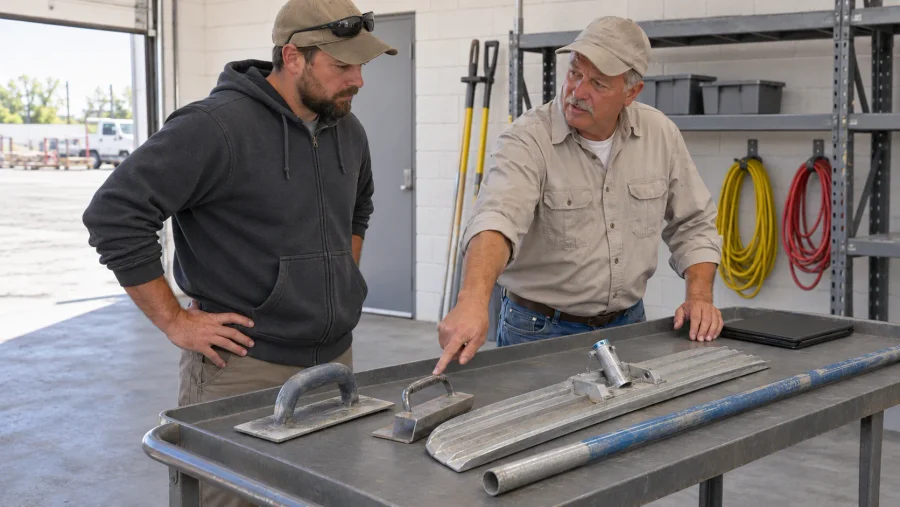
Investigate Reliability When Hiring Concrete Workers
A dependable crew member needs to understand the schedule and communicate when circumstances change. Start by explaining where to report, the expected start time, whether locations change, and how the company communicates a weather or pour delay. Then ask whether the applicant can meet those conditions and what they would need clarified before accepting.
Discuss arrival arrangements directly. If the requirement is reaching a particular site at a particular time, ask about that requirement instead of assuming that owning a car proves reliability. Likewise, a candidate cannot meaningfully confirm availability for an early start if the company has not explained the reporting location or how much notice it provides.
Use two questions to move from agreement to examples:
- “Tell me about a time your plan for getting to work changed before a scheduled shift.” Ask when they recognized the problem, whom they contacted, and what information they provided. The answer should reveal how they handled the situation rather than simply whether a delay occurred.
- “Describe an assignment you had to complete while your supervisor was occupied elsewhere.” Ask what instructions they received, how they checked their understanding, and when they asked for help. Look for follow-through and communication about limits, especially when an unfamiliar task arose.
Clarify incomplete answers before drawing conclusions. If an applicant says they always arrive on time, request one example of preparing for an unfamiliar reporting location or a changed shift. If they describe a problem, investigate their response and the employer’s instructions rather than treating the existence of a problem as the entire assessment.
Recruiting behavior also needs context. An unanswered call during someone’s current workday differs from a missed appointment they confirmed, and a rescheduled interview may follow an employer’s own late change. Record what was agreed, what happened, and what remains unexplained, using consistent expectations for applicants to the same role.
Use Concrete Work Scenarios to Discuss Safety
Ask candidates what they would notice and do in a situation related to the opening. An experienced finisher should be able to connect an answer with relevant work; an entry-level laborer may show readiness to learn by recognizing when they need instruction. Use the same core scenarios within each role and have a qualified supervisor review them against the actual assignment.
When wet cement contacts the skin
Describe wet cement entering a worker’s glove or boot during placement and ask what the candidate would do next. OSHA identifies skin burns and dermatitis among the hazards of wet cement. Listen for recognition that the exposure requires prompt attention under the site’s procedures, including communicating the problem, rather than treating discomfort as something to tolerate until the work is finished.
A useful follow-up asks what they would do if the supervisor were occupied. This tests whether the candidate can explain the concern and seek appropriate assistance while the crew is under pressure. Keep the discussion focused on actions and reporting, with the employer responsible for providing the procedures and training.
When the planned dust control is missing
Describe a concrete cutting task whose planned dust control is unavailable before work begins. Ask what the person would clarify, whom they would notify, and what they would do while the issue is resolved. OSHA’s construction silica guidance requires covered employers to control exposure and train workers, so the conversation should address the response to a missing protection rather than reward improvisation.
For an experienced applicant, request an example of raising an equipment or work-method concern on a previous project. For an entry-level applicant, investigate whether they would ask for direction before proceeding with unfamiliar work. These answers help identify judgment and training needs; they do not verify the employer’s compliance or replace task-specific preparation.
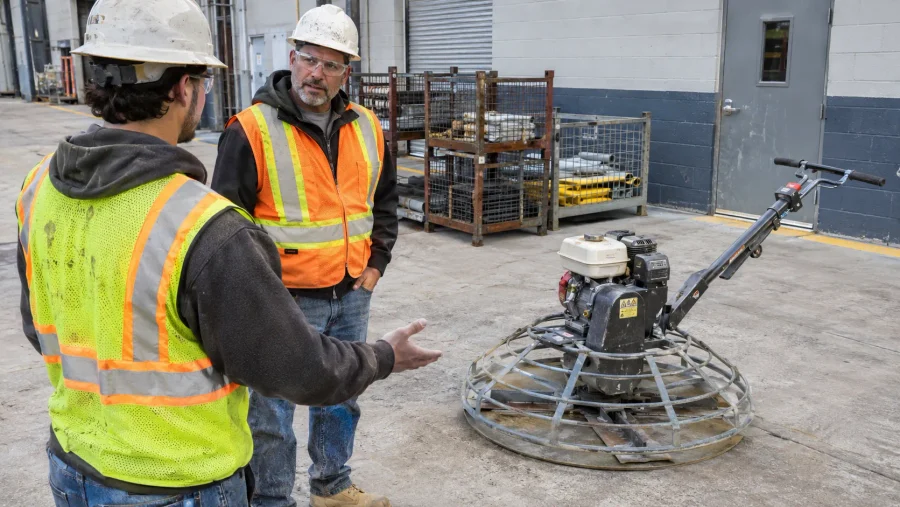
Apply the same approach to equipment the applicant has never operated. Ask how they would explain that limit and request instruction, then record the answer as part of the role evaluation. A confident claim that they can figure out any machine needs follow-up about actual training and experience.
Keep medical history out of these scenarios. The EEOC’s guidance on employment tests and selection procedures explains limits on pre-offer disability inquiries, the need for appropriate selection methods, and reasonable accommodations. Discuss the work and the candidate’s response to it, with accommodation requests handled through the appropriate HR process.
Turn the Evidence Into a Work Assignment
Before deciding, compare the applicant’s examples with the requirements set by the foreman. Distinguish what is supported, what still needs verification, and what the employer can teach. Our overview of candidate assessment strategies provides context on collecting evidence through interviews and other methods; choose each method because it answers a question relevant to the opening.
For an experienced finisher, a detailed project walkthrough can help establish familiarity, but discussion alone cannot confirm every practical skill. Have a qualified trade lead determine what additional evaluation is appropriate before assigning independent finishing work. For a laborer, an explanation of a fictional assignment using clean, stationary tools in an inactive area can reveal how they follow instructions and ask questions, without putting an applicant into an active pour or around moving equipment.
Use references to investigate duties and behavior that someone actually observed. Ask about the applicant’s responsibilities, how they handled changed instructions, and whether they communicated when work was uncertain. A reference who supervised comparable work can add relevant context; an unreturned reference request leaves a question unresolved rather than providing a negative answer.
Discovered’s automated reference checking supports customizable questionnaires, outreach, and reminders. That can help the hiring team collect comparable information while leaving interpretation with the reviewer. Read the examples behind a response and clarify discrepancies instead of treating a summary score as the entire decision.
If assessments are part of the process, select them for a defined purpose. Discovered’s pre-employment assessment tools can add information about candidates, but the employer needs to understand the tool’s intended use and relevance to the position. A general assessment result should not be treated as certification of concrete finishing skill or a guarantee of attendance and safe work.
Consider two hypothetical applicants for a laborer opening. One has limited concrete exposure but gives clear examples of following instructions and raising problems; the other has more time on concrete sites but cannot explain their own duties. The next step is to verify the relevant evidence and compare training needs with the crew’s capacity, rather than automatically favoring either years of experience or interview confidence.
Once a decision is made, give the receiving supervisor a concise handoff:
- Record the initial tasks and any work that requires further instruction before assignment.
- Name the person responsible for orientation and task training.
- Confirm the reporting location, start time, and contact for schedule changes.
- Arrange a check-in after the first assignment to review understanding and any missing support.
That follow-through matters when the crew becomes busy. A limit identified during screening should still guide assignments after the worker arrives, and the employee needs a practical way to ask questions. Our article on hiring practices and EMR considerations discusses the broader connection between hiring and workplace risk; the employer’s ongoing practices remain essential to actual performance.
Hiring concrete workers is more effective when a decision tells the foreman what the person can contribute and what preparation they still need. Use the same evidence-based approach across recurring openings, and review whether the assignment matched what recruiting understood. Explore construction hiring software if your team needs help coordinating screening, references, and the people responsible for the next decision.
Frequently Asked Questions
What should employers check first when hiring concrete workers?
Determine whether the role requires independent finishing experience or support work under direction. Confirm the reporting arrangements, ask for relevant examples, and discuss how the candidate handles uncertainty and hazards. Evaluate those answers against the tasks and supervision planned for the opening.
Can a concrete laborer be hired without concrete experience?
Yes, when the opening and the employer’s training capacity support an entry-level hire. Examples from other jobs may help evaluate following instructions, communication, and follow-through. The company should identify what must be taught before assigning unfamiliar tasks.
How can a contractor evaluate reliability without relying on promises?
Explain the actual schedule and location, then ask about a past change in arrival plans or work instructions. Follow up on the person’s actions and communication, and compare relevant examples with references when available. No screening method guarantees future attendance, so clear ongoing expectations also matter.
Should a candidate be evaluated during an active concrete pour?
An active pour should not become an improvised test of an applicant’s reactions or tolerance for pressure. Begin with questions and controlled discussions away from active hazards, and have a qualified trade lead plan any additional evaluation required. Hiring decisions should lead to appropriate instruction and supervision before work is assigned.
Content