A resume that says “excavator operator” leaves important questions unanswered when your next assignment involves a utility replacement beside an open street. The candidate may have years of experience moving material in an open yard but little experience coordinating with a crew in a restricted work area. That difference should shape the interview before it changes the field plan.
When hiring heavy equipment operators, screen for experience with the assigned machine and work, verifiable qualifications, safety decisions, and availability for the actual project. Combine an initial conversation with field review and appropriate checks. A confident interview or a training card alone cannot establish readiness for every assignment.
The demand extends beyond one contractor’s backlog. The Bureau of Labor Statistics projects about 42,500 construction equipment operator openings annually during 2025–2035, including openings created by workers changing occupations or leaving the workforce. That national estimate covers the occupation broadly, not just heavy civil or municipal projects, but it supports building a repeatable screening process before the next urgent opening.
Define the Assignment Before Reviewing the Operator
Start with the superintendent or equipment manager who understands the opening. “Heavy equipment experience” is too broad to distinguish an operator who can perform the planned work from one who needs a different assignment or additional preparation. Record the machine type, relevant attachments, work activities, and conditions that will matter during review.
For example, loading trucks with a wheel loader, finishing grade with a dozer, and operating an excavator on a drainage project call for different experience. Familiarity with one machine may support learning another, but the hiring team should establish what transfers and what still needs evaluation. Avoid treating total years in construction as a substitute for relevant operating history.
A short assignment brief can organize the first conversation:
- Equipment and tasks: Identify the machine, attachments, and work the operator would be assigned.
- Project conditions: Describe restricted access, nearby public activity, crew coordination, and other conditions relevant to the opening.
- Schedule and reporting: State the reporting location, shift, expected travel, and anticipated project duration.
Public works contractor hiring also requires clarity about who the employer is. A person applying to your company for a municipal project is applying for a contractor position, not necessarily a government job. If you use phrases such as “municipal contractor jobs” in a posting, explain the employer, assignment, and employment arrangement rather than letting the project owner’s name create assumptions.
Define essential entry requirements separately from skills your operation can develop. An opening intended for an experienced operator should describe the relevant work clearly; a trainee opening should identify the supervision and training available. Otherwise, recruiters may screen out promising trainees while advancing experienced applicants whose background does not match the assignment.
Verify What Each Credential Actually Establishes
The buyer question often sounds simple: how do we find operators who are safe and certified? The useful follow-up is “certified for which equipment and work?” A course completion record, a license, and an employer’s evaluation answer different questions, and the recruiter needs to know which evidence the opening requires.
OSHA explains that an Outreach training card is not a certification or license. An OSHA 10 or OSHA 30 card can document completion of that course, but it does not establish that the holder can operate your excavator, loader, or crane. Check a project’s training requirements without treating a general safety course as machine-specific qualification.
Crane work needs particular care. For covered construction crane equipment, OSHA’s operator training, certification, and evaluation standard addresses those requirements separately, subject to its scope and exceptions. Certification alone does not replace the employer’s required evaluation of an operator’s ability to perform assigned work.
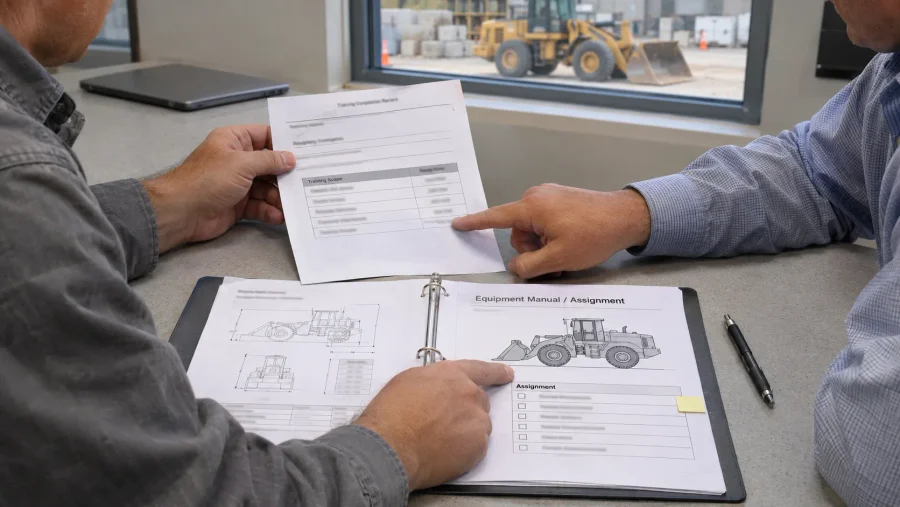
Do not extend that crane rule to every earthmoving position. Have the responsible safety or operations reviewer identify the requirements applicable to the equipment, jurisdiction, and project. Ask them to specify the credential, issuing organization, scope, and verification method so HR can collect the right information without making a technical determination it is not equipped to make.
The candidate record should distinguish “reported by applicant,” “document reviewed,” and “verified with source.” If a required item is missing or unclear, assign the follow-up rather than quietly treating the application as complete. A file containing several cards can still leave the qualification that matters unresolved.
Ask About Decisions Made Around Real Work
An operator’s account of a specific assignment gives the interviewer more to examine than a general promise to work safely. Ask candidates to explain what they observed, what they did, and who else was involved. Follow the same core questions for applicants to the same role, while allowing relevant follow-up questions.
1. “Walk me through your most recent assignment on the equipment we would use.” Ask about the machine, attachment, task, and conditions. Find out what the operator performed independently and where a supervisor or another crew member directed the work. A detailed account helps a field reviewer identify both relevant experience and gaps to explore.
2. “Tell me about a time the planned work could not proceed as expected.” Look for how the person recognized the problem, communicated it, and responded to instructions. Examples might involve an equipment concern, unclear work limits, or a change in site conditions. Evaluate the explanation with a field leader rather than expecting a recruiter to judge a technical procedure from memory.
3. “How did you coordinate with people working around the machine?” Ask for an example involving ground personnel, another operator, or a designated spotter where relevant. Explore how the candidate established communication and what happened when communication became unclear. Specific examples are more useful than agreement with a leading question about whether safety matters.
4. “Describe a problem you reported before it became part of the day’s work.” Ask what the candidate noticed, who received the report, and how the issue was resolved. The purpose is to understand reporting behavior, not to reward a story about taking unnecessary risks or working through a defect.
These questions concern decisions that the employer also has to support through safe equipment and work planning. For example, OSHA’s earthmoving equipment provisions address access roadways, braking systems, and audible alarms. An interview cannot compensate for equipment or site conditions that the operation needs to address.
Record the evidence behind the answer instead of writing “good attitude.” A useful note might say that the candidate described reporting a machine concern to a supervisor and waiting for direction, with the equipment and circumstances identified. If the answer stays vague after follow-up, record what remains unknown rather than assuming confidence proves competence.
Our guide to hiring strategies and EMR rating explores the broader connection between hiring and workplace risk. For this opening, keep the decision grounded in the candidate’s relevant evidence; an interview does not predict an individual’s future injury record or guarantee an insurance result.
Turn Promising Answers Into Evidence
A field reviewer should decide what additional evaluation the role needs. A discussion of past work can identify the next step, but a recruiter’s notes do not demonstrate operating ability. Plan any practical evaluation around the actual equipment and assigned work, with an appropriate evaluator, controlled conditions, and the necessary safeguards.
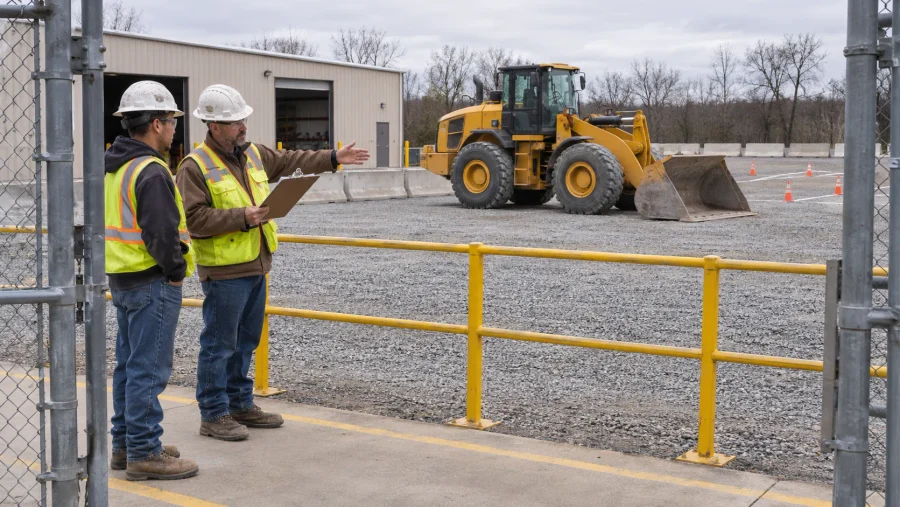
Do not turn an urgent application into an improvised tryout on a live project. Where a practical assessment is appropriate, define what will be observed and how the result will be recorded before it begins. A conversation beside parked equipment can clarify experience, but it should not be represented as a completed operating evaluation.
Use references to investigate the parts of the work that need corroboration. With appropriate permission and a consistent process, ask a former supervisor what equipment and assignments they observed, how the operator responded to changing instructions, and whether the person reported concerns. Distinguish firsthand observations from general recommendations, and document when a reference can only confirm dates or job title.
The same discipline applies to assessments. Our overview of candidate assessment strategies explains approaches such as structured interviews and work samples. Select methods that address the opening’s requirements rather than adding tests simply because they are available.
Discovered’s pre-employment assessments can contribute information about relevant skills or work-related characteristics within a broader review. Confirm the purpose and suitability of the specific assessment before using it. An online result does not certify operating ability or replace a required equipment evaluation.
Background screening also has a defined scope. The EEOC and FTC’s employer guidance on background checks explains requirements including written permission for third-party reports and procedures when an employment decision relies on those reports. Apply relevant federal, state, and local requirements rather than treating a report as an automatic pass or fail.
Discovered’s background check feature allows teams to request checks through a candidate profile and track results. Confirm the available searches and your review process; do not assume that requesting a background check also verifies every operator credential. Those are separate questions with potentially different sources.
Complete the Review When Hiring Heavy Equipment Operators
Before closing the review, return to the job the candidate would actually accept. Confirm the reporting location, shift, travel expectations, anticipated duration, and compensation terms through the appropriate hiring process. A technically relevant candidate may still decline if those details emerge late, and an unanswered availability question should remain visible.
For hiring heavy equipment operators, a brief final review should establish four things:
- The relevant operating experience has been reviewed by the appropriate field person.
- Required credentials and checks have a documented result or a clearly assigned outstanding action.
- Any further evaluation, training, or supervision has an identified owner.
- The candidate understands the assignment and the employer has confirmed the next step.
Discovered’s applicant tracking system supports candidate records, custom statuses, communication, and collaborative evaluation. Those functions can help HR and field reviewers keep their observations connected. Configure the process around your decisions rather than letting a generic “qualified” label hide an unfinished review. General contractors that self-perform earthwork can see how operator and leadership hiring share one process in our hiring software for general contractors page.
The goal of hiring heavy equipment operators is to make a defensible match between a person and the work your team needs performed. Preserve the evidence and communicate any limits on the initial assignment to the responsible supervisor. To explore how to organize that process, book a Discovered demo with one representative opening and the reviews it requires.
Frequently Asked Questions
What should employers check when hiring heavy equipment operators?
Review experience with the specific equipment and work, applicable credentials, safety-related decisions, references, and assignment availability. Use field review and appropriate evaluation to address operating ability rather than relying entirely on a resume or interview.
Does an OSHA 10 or OSHA 30 card certify someone to operate equipment?
No. It documents completion of an Outreach course, not an equipment operator certification or license. Determine separately what the machine, assigned work, and project require.
Do excavator operators and crane operators have the same certification requirements?
Do not assume they do. The construction crane standard has a particular scope and exceptions; the responsible reviewer should determine the requirements that apply to the equipment and assignment being considered.
How can a contractor assess an operator without a rushed jobsite tryout?
Begin with specific work-history questions and a field review of the answers. If a practical evaluation is needed, arrange it deliberately with an appropriate evaluator and safeguards instead of putting an applicant into production work to see what happens.
Can hiring software verify that an operator is ready for every project?
Software can organize information and support communication, but readiness depends on the equipment, work, evidence, and required reviews. Keep technical evaluation and authorization with the people responsible for those decisions.
Content