



Imagine updating your hiring process and instead of drawing red tape, you build trust with candidates, regulators, and your community.
That’s exactly what the Fair Hiring Act and related Fair Hiring Laws can do. This guide explains why these laws matter, how they shape your policies, and what practical steps to take.
🧩 What Are Fair Hiring Laws and Why Do They Matter
“Fair Hiring Laws” refers to a range of US federal and state regulations that prohibit discriminatory practices in hiring and mandate equitable recruitment standards.
- These include the Fair Hiring Act, as well as EEOC rules, ban-the-box ordinances, and fair chance mandates.
- They aim to level the playing field—regardless of race, gender, disability, criminal history, or age.
- Companies that follow these laws not only avoid legal trouble, but they also build stronger, more inclusive teams.
Want a quick dive into everyday practices? Check out our Fair Hiring Practices Every Employer Should Follow guide.
📜 Key Provisions of the Fair Hiring Act

Here’s a snapshot of the core elements that may apply to your business:
| Provision | What It Requires | Impact on Employers |
| Ban-the-Box | Delay criminal history checks until after initial steps | Encourages merit-based evaluation |
| Salary Transparency | No asking past salary; provide range upfront | Reduces wage bias, boosts equity |
| Fair Chance Hiring | Inclusive practices for candidates with convictions | Access to larger, often overlooked talent pools |
| Non-Discrimination Mandates | No bias against protected classes | Must have a documented, neutral hiring process |
| Record-Keeping & Reporting | Maintain hiring metrics and assessments | Enables auditing and accountability |
One study found that “ban-the-box” laws may reduce recidivism by improving access to legitimate employment opportunities, especially when implemented alongside strong support systems. Read the full research on Wiley Online Library for a data-backed look at the broader impact of fair hiring policies on criminal justice outcomes.
To align further with inclusive strategies, explore Understanding Fair Chance Hiring Laws.
🛠️ What This Means for Your Hiring Team
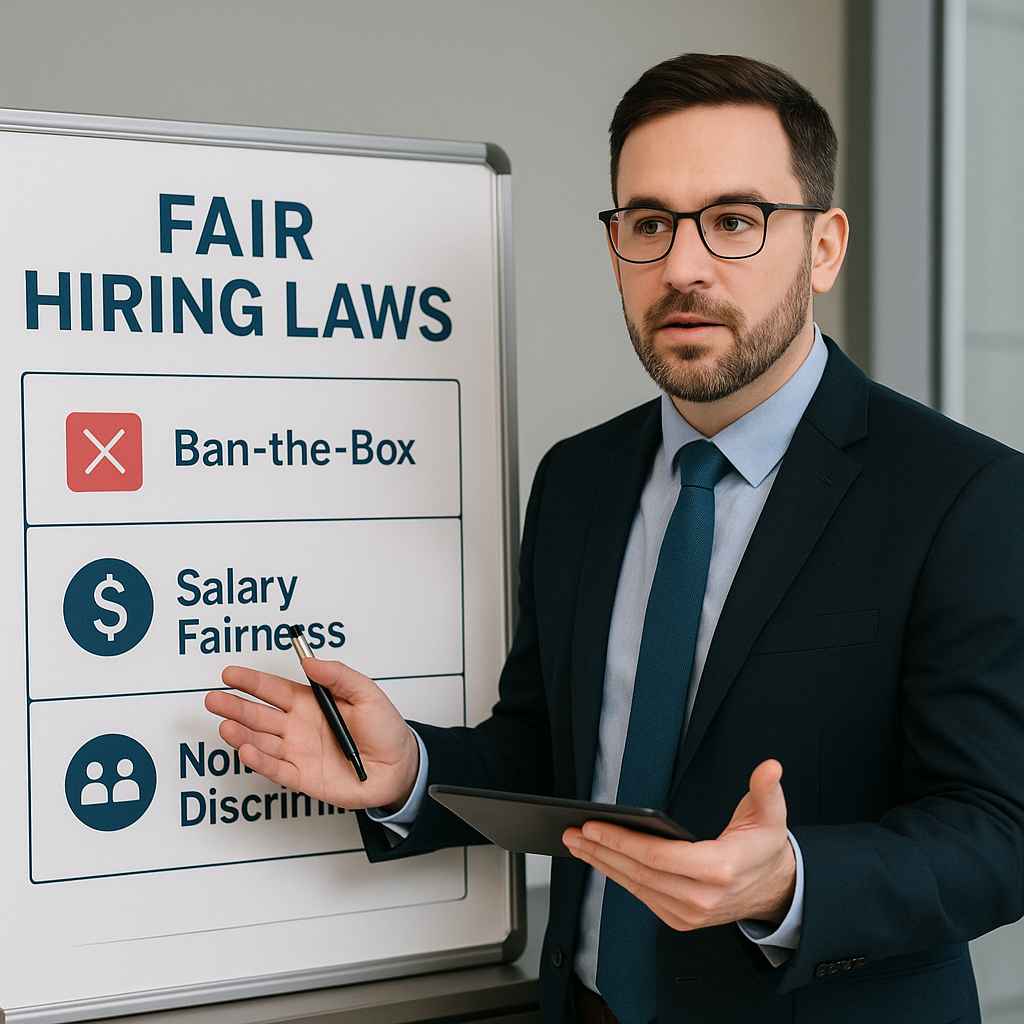
Here’s how these laws transform everyday recruiting tasks:
H2. 1. Job Ads & Salary Disclosures
Ensure your job listings do not ask for salary history and include a transparent salary range.
H2. 2. Application Forms
Remove questions about criminal records—unless legally required—until later in the interview process.
H2. 3. Candidate Screening
Use structured, score-based evaluations (see Reducing Bias in Hiring) to ensure consistency and fairness.
H2. 4. Interview Process
Train your interviewers on unconscious bias and standardized interviewing. Consider tools like How to Build a Truly Fair Hiring Organization.
H2. 5. Record-Keeping
Track demographic and interview data, document decisions, and prepare for potential audits or EEOC inquiries.
🧭 Benefits of Compliance—and Beyond

| Benefit | Business Impact |
| Legal Security | Avoids EEOC investigations, fines, and lawsuits |
| Brand Reputation | Shows candidates and customers you prioritize fairness |
| Better Hiring Outcomes | Taps into diverse talent with fresh ideas and retention benefits |
| Operational Equity | Fosters consistent hiring practices across teams and offices |
See how companies like those in Top Fair Chance Hiring Practices have improved their outcomes.
✅ Related Pages for Deeper Learning
- What Is Fair Chance Hiring? A CEO’s Guide to Inclusive Recruitment
- Fair Hiring in Banking: How the Act Impacts Financial Institutions
- EEOC Compliance in Hiring: What You Need to Know
- Hiring Fairness Compliance: Are You Meeting the Standards?
- Can Automation Make Hiring Fairer? Here’s How It Works
🤔 FAQs
What exactly is the Fair Hiring Act?
It’s a federal proposal requiring gender-neutral pay posting, delay of criminal history questions, and stronger hiring protections.
Are Fair Hiring Laws enforceable across all states?
Some are federal; others are state or city-specific, like in New York or California. Always check local guidelines.
Does transparency around pay and history slow hiring?
Not at all—teams often report faster, more focused hiring and improved candidate trust when they’re upfront.
How does this relate to fair chance hiring?
They overlap. Both aim to include those with past convictions. For more, see our full guide: Top Fair Chance Hiring Practices.
Can my ATS support Fair Hiring Laws?
Yes. Many tools now support structured interviews, reporting, and hiding salary or conviction history until approved stages, reducing manual blocking steps.
🎯 Final Thoughts
The Fair Hiring Act and broader Fair Hiring Laws aren’t just legal checkboxes—they’re strategic blueprints.
Follow them well, and you’ll not only comply—you’ll foster an organization that’s equitable, competitive, and resilient.
For your next step, dig into this overarching roadmap: Fair Hiring Explained: What It Means and How to Do It Right. It’s your compass for hiring with integrity.
Content